
Try a river this summer
Trending
Wherever you live, there's probably a place very close by where you can go fishing. Lakes, rivers, ponds, and reservoirs are everywhere. Some fortunate folks are closer to outstanding fishing opportunities than others, but most of can find a place to go fishing where we'll have a reasonable chance to get bit.
Rivers can provide some outstanding fishing action throughout the summer. Actually, rivers can be good year 'round, especially the larger rivers. However, in the summer, small, medium, and large rivers can provide anglers with action from a wide variety of fish species.
Sometimes, in the heat of the summer and with weather systems going through regularly, lakes can get tough to fish. The fish in rivers aren't as affected by the weather that lake fish find offensive. River fish just keep eating. Rivers have current, so fish in rivers are constantly expending energy. To sustain their energy, they need to eat more often. Because river fish are almost always fighting the current, they become stronger than their lake-dwelling cousins. They also usually don't grow as fast, although there are still plenty of big fish to be found in most rivers.
Because of the current, it's a good idea to remember that most of the time a fish that wants to eat will be facing upstream. Therefore, it works well to present your bait so it's working downstream or cross current. By doing so, the fish will be able to see it better. Also, any wounded minnow or bug or crawdad will be moving downstream, so this is a very natural presentation.
There are times when working upstream is better. This is most noticeable when trolling crankbaits. Troll crankbaits upstream, going faster as the water warms.
A jig/plastic combination is a very good way to go about catching river fish. In the summer, river fish have a hard time passing up a jig tipped with a three to four inch Rage Swimmer. Another river fish producer is a Mini King Spinnerbait. The flash of the spinner is especially helpful if there is some color in the water.
When a river fish is hungry, and they're hungry much of the time, they'll eat just about anything regardless of color. However, it's hard to go wrong with a bait in a crawdad color.
You don't need to have a boat to fish rivers, although a boat certainly provides access to areas that the shore angler doesn't have. Nonetheless, anyone that wants to go fishing can catch river fish.
If you're a shore or wading angler, look for areas that have deeper water nearby. In small rivers, deep water might be only four or five feet deep. Concentrate your efforts on cover near deep water. Walleyes, bass, pike, and any other river predators will hang out around logs, rocks, or anything that provides relief from the current, waiting for something that looks good to eat to go by.
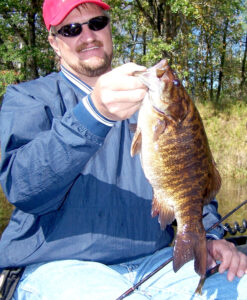
The rivers that many of us grew up with aren't the same rivers today. As has everything else, they've aged. There aren't as many deeper holes or deeper stretches. The species of fish has changed also. Rivers that were home to walleyes years ago are now occupied more by smallmouth bass. Fishing isn't better or worse in those rivers today, it's just different. And different is okay.
Rivers are abundant across North America. Their inhabitants are willing eaters and strong fighters. That should be enough to encourage anyone who wants to go fishing to try a river this summer.