
Bell first in county, Brewer first in Newcastle
Willson credited with building and leading Webster City
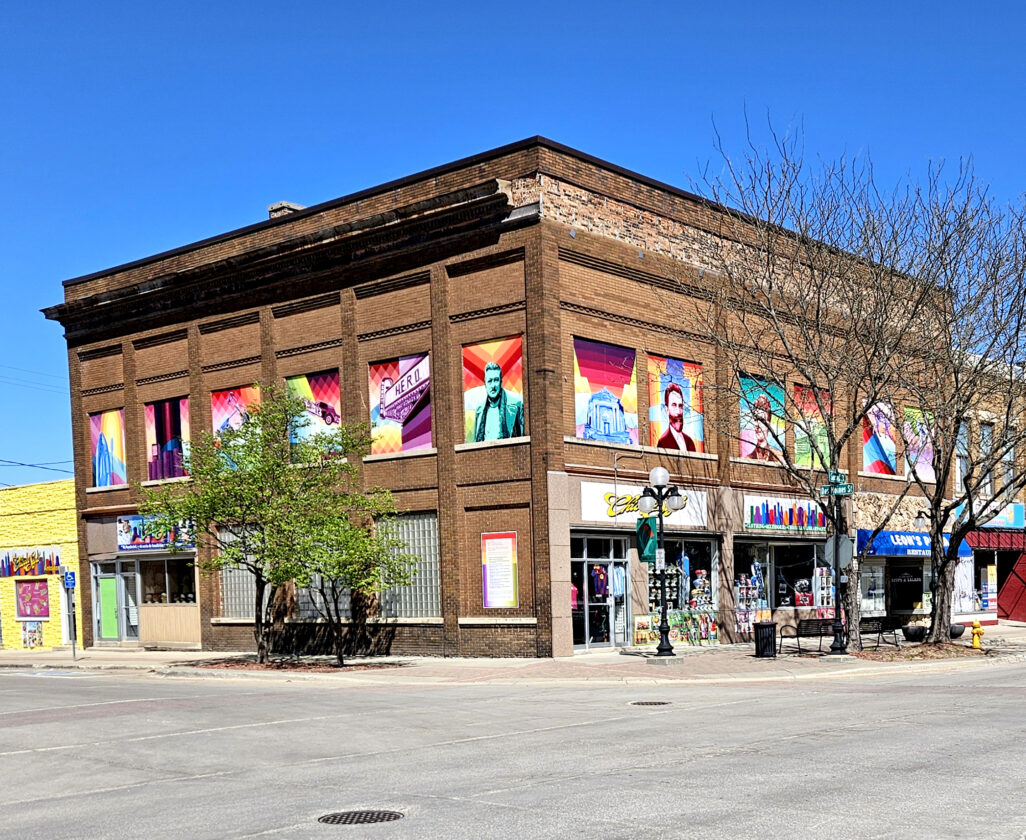
Freeman-Journal photo by Kolleen Taylor<br> The corner building at Second Street and Des Moines Street is the building C.W. Willson built across the street from the original hotels he built. The Willson Hotel stood where the parking lot of the Daily Freeman Journal is today. The corner building was the first of a number of buildings Willson and Jacob Funk built to establish the business district on Second Street. The oldest tenant in that building is Leon's Pizza, which has been serving food there for over 50 years.
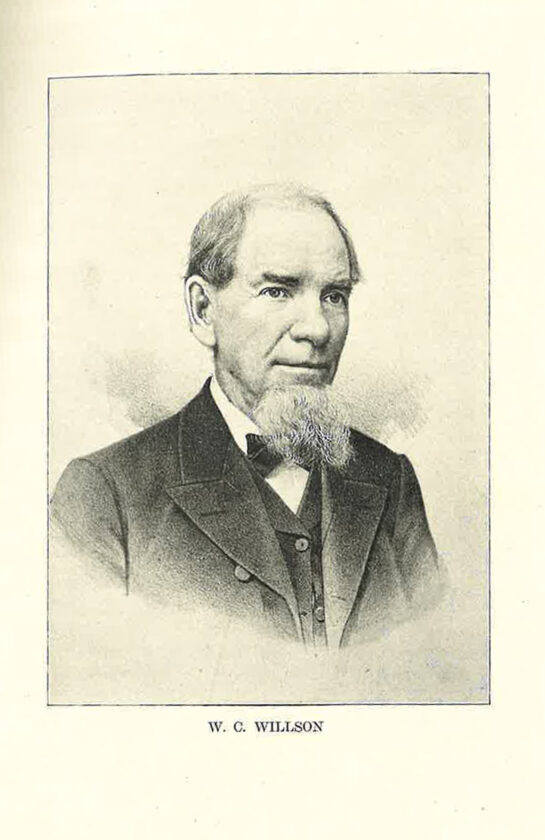
Willson Brewer
Freeman-Journal photo by Kolleen Taylor<br> The corner building at Second Street and Des Moines Street is the building C.W. Willson built across the street from the original hotels he built. The Willson Hotel stood where the parking lot of the Daily Freeman Journal is today. The corner building was the first of a number of buildings Willson and Jacob Funk built to establish the business district on Second Street. The oldest tenant in that building is Leon's Pizza, which has been serving food there for over 50 years.
Willson Brewer
Trending
The earliest settlers into Hamilton County had a tough path to follow to find this part of Iowa. Travel was by water or by covered wagons. The indian tribes who had established communities in the area co-existed with the original explorers and by many accounts had a supportive co-existence.
Preston Bell has been identified as the earliest settler in Hamilton County. Born and raised in Indiana, he was seeking a home on the frontier, and had been stopping for some time near Des Moines.
Traveling in a covered wagon with an ox team, he came north, following the Boone River. What he found was around 40 to 60 acres of what was called "weed bottom," making it possible to plant a crop immediately.
That first crop was corn. The soil was rich, and mellow and he reported that he raised the finest corn putting him in a position to supply the U.S. surveying party with corn when they arrived to measure the lands. He lived most of his life in Hamilton county, until 1892 when he sold his ground and moved to Kansas.
Prior to when Bell settled in the county, no survey had been made. The Boone river had not been named and was referred to as "The East Fork" for many years. At that time, the river was narrow and deep, without sand bars.
It was assumed that the river was named when the first survey was completed near it's mouth in 1850.
The Wilson Brewer family, nephew William and the William Stanley family all traveled to the Hamilton County area in the fall of 1850. They settled near Bone's mill, about six miles south of Webster City. Traveling with ox teams in covered wagons, they would set up a tent and found a good supply of venison, finding a plentiful number of deer.
Wilson Brewer and William Frakes laid out the town of New Castle in the fall of 1854
Brewer staked out a claim just south of the mill site and built a cabin. Shortly after doing that, he sold his cabin to his nephew, staking out a new claim within the present boundaries of Webster City. Mr. Brewer was officially the first settler within the present limits of Webster City.
Today the Wilson Brewer Park located at 220 Ohio St. honors the family who took such major risks to settle in Iowa. One of the cabins that have been restored was where they lived.
W.C. Willson arrived in Webster City in the spring of 1855, when the town we know as Webster City was still named Newcastle. Willson was quite impressed with the community, but family members deemed it to be too far west.
After viewing other properties he returned to Newcastle, arriving in March 1855, and stayed at Wilson Brewer's log cabin for two weeks while his home was being readied for them.
Brewer's first nights in his log cabin home were the last quiet evenings, as within days, they had twenty individuals staying the night. From then until October they fed no less than 40, up to 100 people at a meal. While accommodating travelers, Mr. and Mrs. Willson slept in one corner of the room on the main floor with curtains around it.
The first town election was held at the Brewer home. The polls were their dining room table, and the ballot box was J.M. Funk's hat. Willson had erected log cabins and a saw mill on the site of Webster City water mills owned later by Judge Chase.
Their log "hotel" was sold, and they moved into a slab barn for 3 weeks, until W.C. Willson completed a framed building known as the Webster City hotel. On July 5, 1855, W.C. Willson, Henry Kellogg and Charles Wilder filed for recording the original plat of Webster City.
In 1856, W.C. Willson was elected as a state senator for Webster County. At that time, the counties of Webster and Hamilton County were together. Willson traveled to the capital in Iowa City to present an act to divide the large county into two separate counties. The western county was to retain the name Webster and have its county seat in Fort Dodge. The east half was to be named Sharon County and have its county seat Webster City. To get this enacted, Willson contacted the president of the Senate, William W. Hamilton. To honor his assistance, the county name was changed from Sharon to Hamilton County. The act passed the legislature and became law on January 1, 1857.
Willson was credited with working to get the railroads to Webster City, building the first Depot at Des Moines Street, and laying track to continue the train to Fort Dodge. He also built a new two story hotel at the corner of Des Moines and Second St., then built the Willson Opera House on the northeast corner where it housed on it's first floor the Webster City Savings Bank and Crary's Hardware. The second floor housed the opera house. This building today still stands, with its longest tenant, "Leon's Pizza" on the main floor.
Willson and Jacob M. Funk constructed many of the business buildings on Second Street, and was considered responsible for shifting the main business district from Seneca to Second street.
But Willson wasn't finished with his vision. He was looking for a better supply of coal, and needed good clay for a new tile factory. He opened the Crooked Creek Coal Company near Lehigh and began mining coal. To transport, he built another line, referred to as the Crooked Creek railroad.
Willson died on August 19, 1900 while supervising the unloading of slag to fill in a hole.
His funeral was the largest crowd for any funeral even held in Webster City; credited for building and preparing Webster City for the next centuries.
(This history was compiled by Kolleen Taylor using the History of Hamilton County, written by J.W. Lee and the History of Hamilton County compiled by Martin Nass)