
Hamilton County Conservation office has a full plate, and a plan in the works
Trending
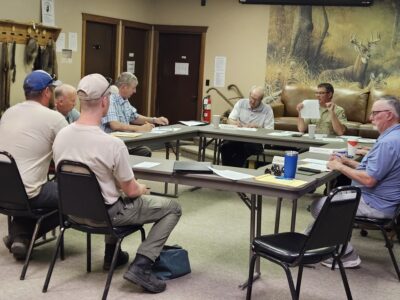
The Hamilton County Conservation board meeting certainly presented a can-do attitude when they tackled their agenda last Thursday.
Facing reductions in their budget starting July 1, like many departments, they have tightened their belts to meet budget requirements. But that doesn't mean they are not moving forward.
It just means they are working a lot harder, a lot smarter.
Brian Lammers, executive director of the Hamilton County conservation office, says the future may be a bit murky, but that doesn't mean they are abandoning their efforts in conservation.
"It's the reason we exist," said Lammers. Water quality, land conservation, the wetlands all are programs that are impacted by the work they do. They have to put together a plan to make it work.
That plan is a long-range strategic plan that includes a nature center. The nature center, explained Lammers, would be located in the conservation building they have now. They have built a separate shop, using existing employees to finish out the building. This will open up the existing space for use as an educational center.
Board member Mike Brandrup was reluctant to approve the long-term strategic plan, based on tax support.
"People have to realize we have to depend on income programs to support other programs," he said. The golf course, and the campsites are two of those such ongoing income areas.
Lammers said the nature center is something they have been discussing for the past three or four years and has private funding that will help convert the site. The strategic plan, he said, is important to finalize as people leave the board so there will still be a guideline for the future.
Current board members include Dennis Bahr, Chairman, Jim Richardson, Diane Sinclair, Jay Heeren and Brandrup.
One of the ways the conservation office has accomplished so much has been through grant writing, accessing funds from private organizations, in addition to state and federal programs.
Lammers said he has lost track of the hours spent writing grants. But it has paid off for them, allowing them to upgrade signage throughout the park and to work on trail development. They have also been able to find funds to support wetland development throughout the county, which provides a natural habitat for wildlife in addition to repairing the ecosystem.
Signage was one of the biggest problems cited in the First Impressions report presented last year to Webster City. Lammers has since worked on grants to help address that problem and he found funding to support that project. The signage should be done by fall, he said.
Another grant project he is working on is finishing the trail between Jewell and Ellsworth.
The educational programs, often conducted by John Laird, the county naturalist, may be pausing, said Lammers, not eliminated. Laird, who plans to retire Jan. 1, has been instrumental in providing the educational aspects of these programs.
Some of the school educators who count on these programs have raised concerns about how that will look in the future.
"We have three very educated park rangers," Lammers explained, and they will take on some of those roles.
One of the issues addressed during the meeting was cleaning up after the storms. Lammers said many of the old oaks are showing signs of decline, increasingly noticeable since the drought over the past five years. Getting ready for the park season for camping has required removing dead trees, branches and other debris from the parks. It's one of the roles the employees play, keeping up with damages caused in the property. But already they have seen that work pay off.
"It's been a very good camping year," said Lammers.
It's also been a good year for golf.
Golf Course Superintendent Travis Brown, said they only had to close the park for one day due to damage and weather. He indicated revenues to the golf course had shown a significant increase over last year.
According to Lammers, the conservation office generates nearly two-thirds of the revenue they need to operate, and approximately one-third comes from taxpayers. In response to their efforts, revenues from travelers, campers, and other tourists, helps the businesses and the sales taxes for the county.
For that amount, residents have free access to enjoy the parks, the trails, and the many conservation areas they support for hunting, hiking, canoeing and other recreation activities.
The Hamilton County Conservation Office is responsible for much more than just the three county parks and golf course. They also maintain a number of other county locations, such as Albright's Canoe Access, Barner Wildlife Management Area, Bauer Slough, Bjorkboda Marsh Wildlife Refuge, Brandrup’s Timber, Butler Wildlife Conservation Area Wildlife Refuge, Coyote Bend Wildlife Management Area, Gordon's Marsh young hunter education area, Heise Wildlife Management Area, Johnson Wildlife Management Area, Kamrar Wildlife Management area, Mark and Sadie Bishop Conservation Area, Masterson Wildlife Management Area, Richard's Marsh, The Jeanette Groves Wildlife Refuge, and the Tunnel Mill Canoe Access and Wildlife Management Area.
The budget cuts were not easy, however Lammers feels they are able to adjust. They have not replaced several jobs, and reduced costs where possible so they could make critical purchases in the fiscal year 2025-2026, removing them from the budget in 2026-2027. But they recognize that they won't be able to do all the things they had planned.
They will be looking for volunteers to assist in some areas. For those close to any of the county management areas, contact the conservation office and offer assistance. For those willing to donate additional financial support, the conservation board has set up a foundation.
Brandrup summarized his feelings, "I've been involved with Hamilton County Conservation since 1976. I just feel we are at such a critical juncture. How do we survive if we cannot get a funding base? As a group we have to look at 'where do we go'? I don't believe we can operate as we have in the past."
But Lammers is optimistic.
"Revenue can go up and down, the golfing season, the camping, the weather, it's so unpredictable," he said. "The unknown needs to be incorporated into a plan."
It's up to Lammers, his team, and the citizens of Hamilton County to make it work.