
Webster City schools: Overcoming challenges
Positive approaches and curriculum changes impact both students and teachers
-
-
—Daily Freeman Journal photo by Kolleen Taylor
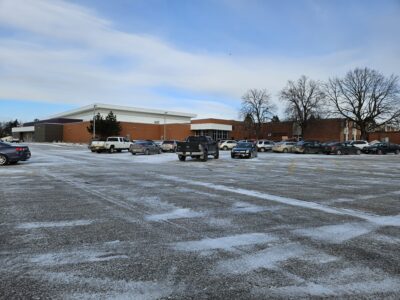
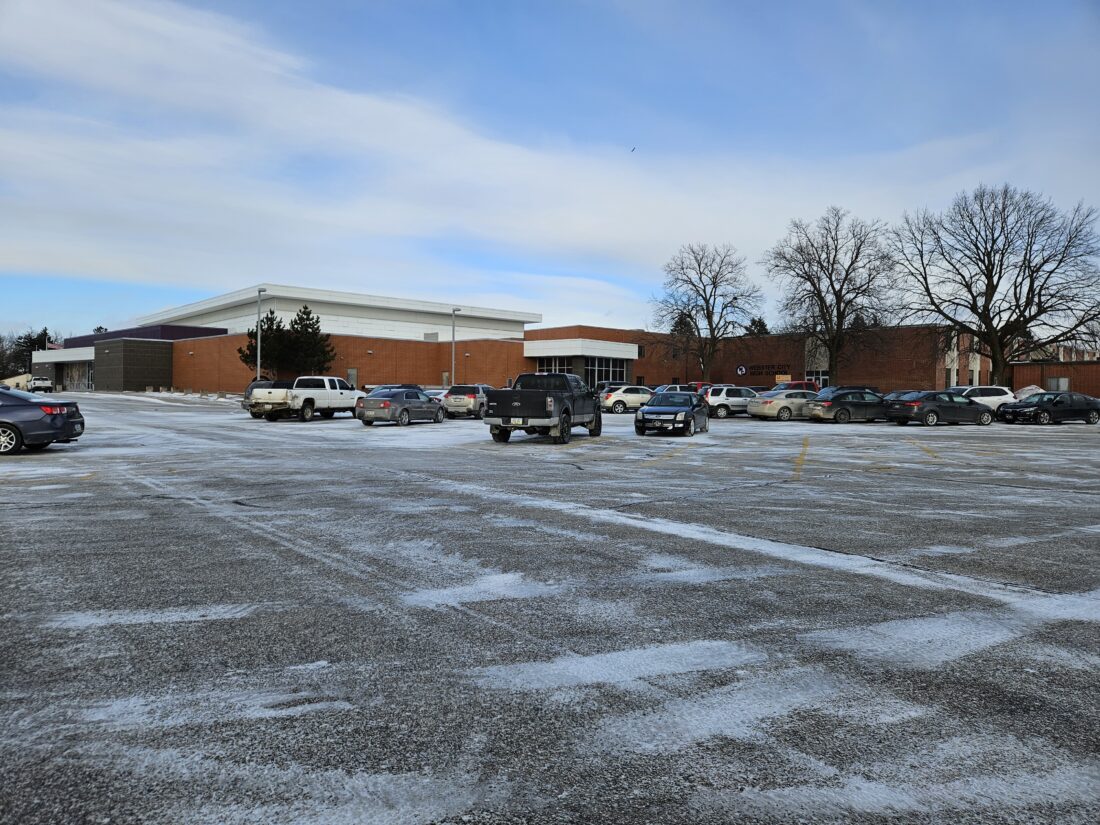
The entrance to the classrooms at Webster City High School is shown above. A separate entrance to the left side of the photo enters the performance gym. A regard to safety is evident with limited access to the building, and required reporting to the office upon entry.
-
-
—Daily Freeman Journal photo by Kolleen Taylor
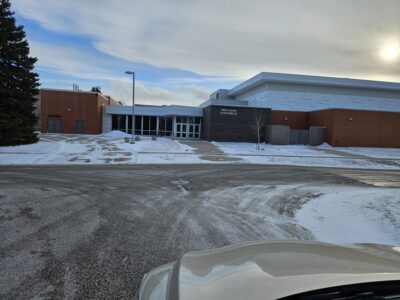
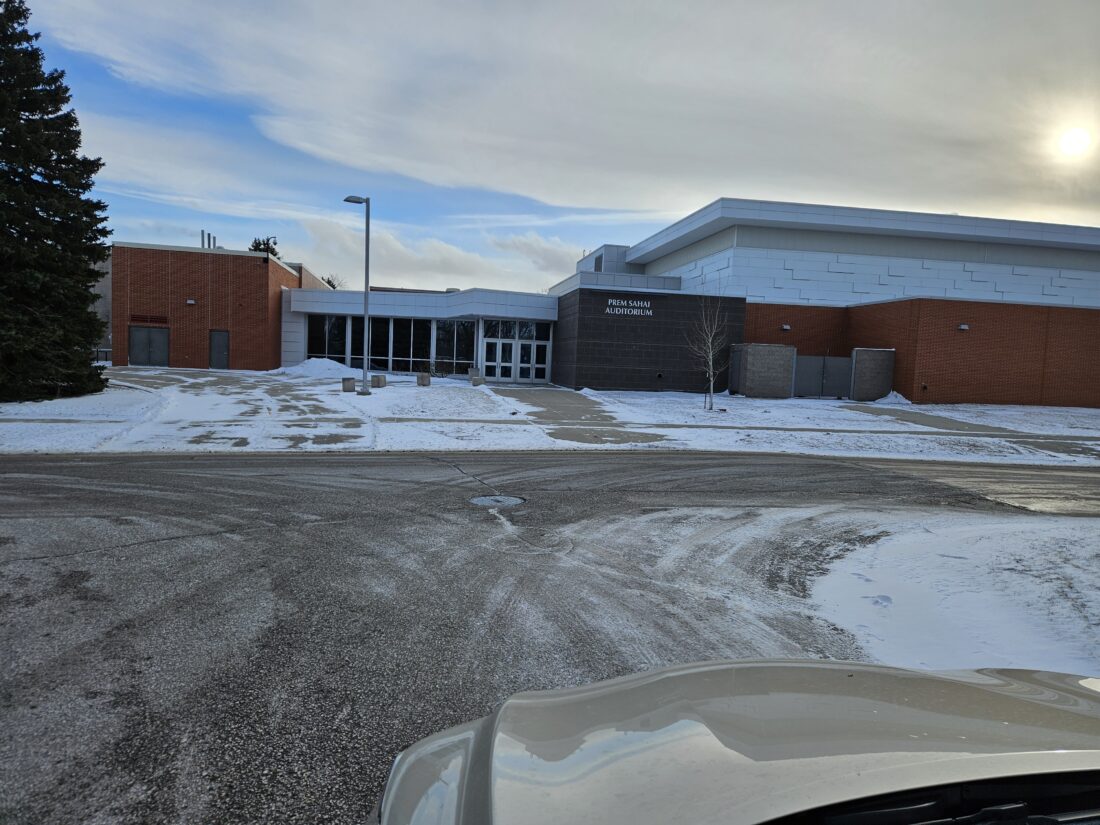
The entrance to the Prem Sahai Auditorium at Webster City High School is used for public performances and student activities. The circular drive-up access allows parents, grandparents a short walk to enter the building from the north side, and has a few handicapped parking spots near the entrance.
—Daily Freeman Journal photo by Kolleen Taylor
The entrance to the classrooms at Webster City High School is shown above. A separate entrance to the left side of the photo enters the performance gym. A regard to safety is evident with limited access to the building, and required reporting to the office upon entry.
The Webster City Community Schools have overcome some challenges during the last few decades as teachers, administration, even school boards have faced many changes and shifts in procedure.
But the school system has overcome the worst of the issues, and the teachers are working hard to stay on top of the changes and studies that have reshaped the classrooms during the past 20 years.
Jama Hisler, director of teaching and learning for Webster City Community Schools has been coordinating efforts between the various school buildings, and is watching the results. Last fall, with the state report card results distributed, she set many goals with the various teams.
The Webster City schools have 1731 students enrolled as of October. High School students are taking advantage of the collaboration with Iowa Central Community College, with 328 classes currently being attended. Those students are then able to add these hours to their college credits.
Classroom work and elementary curriculum that works better for students and teachers is under review.
—Daily Freeman Journal photo by Kolleen Taylor
The entrance to the Prem Sahai Auditorium at Webster City High School is used for public performances and student activities. The circular drive-up access allows parents, grandparents a short walk to enter the building from the north side, and has a few handicapped parking spots near the entrance.
The process of working as teams to address the challenges have been fully implemented in the schools. Several teams are working on reviewing curriculum for math, english and other core subjects. The elementary math curriculum team has narrowed their choices for 2026 changes.
“This team is comprised of administrators, classroom teachers across the grade levels, a special education teacher, an English Language Learner teachers, instructional coaches and the Director of Teaching and Learning. Stratford elementary has participated fully in all phases of the review and piloting process,” said Hisler .
According to Hisler, Sunset Heights Elementary is thriving, and they are analyzing student progress and implementing strategies.
Diane Bahrenefuss, is one of the teachers at Sunset Heights who has changed her role in the Webster City schools from a 3rd grade classroom teacher to a Title I teacher, or an “interventionist.”
She works with students who are struggling with reading in the 2nd, 3rd and 4th grade classrooms.
“We are being trained on the science of reading,” said Bahrenfuss, “Now they can see the different parts of the brain that light up when a person is reading.”
That scientific approach to studying reading has changed the way teachers have approached reading skills for young children.
“We went for a lot of years not using phonics, teaching to recognize the whole word.” she explained. “We now understand this is not the way to do it, they need a lot of instruction in letters and sound.”
Bahrenfuss began teaching at Sunset Heights in 2009. At that time they were told to teach reading by the word, not using phonics. This phonological awareness has made a big difference in the directives to schools which began in 2021, but most recently in Webster City, in just the past few years.
“We are seeing a lot of improvement because the kids are learning; they are not missing any pieces now. It’s a very systematic, explicit teaching, one lesson builds on the next.” Bahrenfuss said.
“It will be interesting to see how long it takes for all the changes. I hope it’s fast,” she said, “You need reading to do anything else, but I also think kids can learn by what the content is. If they are interested in a topic, they are more willing to make the effort. ”
One of the issues that has impacted some of the results has been the diversity of language now in the schools. To address this there is now an english language teacher in each building.
This is all part of the strategy that has helped the school system address some of the challenges they faced resulting from both the years of disruption due to Covid and the influx of more non-english speaking families.
The interest in the school board races and large turnout at the school board forum last fall indicated that the community wants to understand better what has been happening inside local schools.
That interest reflects both pride and concern. Statistics provided by the Iowa State Assessment report card had Hisler, and Webster City High School principal Jason Wedgbury highlighting the district’s ongoing efforts to address challenges raised by the community–many of which are also reflected in the Iowa State Assessment report card which came out last fall.
Overall, Webster City schools performed above the state average in most measured areas. English language performance was the one category that fell below the state benchmark, an area district leaders acknowledge is foundational to student success across all subjects.
While younger students have shown steady improvement over a five-year period, educators continue to face a significant challenge: a growing population of English Language Learners (ELL).
The district currently serves 1,805 students, with ELL enrollment increasing steadily over the past four years:
2022: 256 students
2023: 288 students
2024: 314 students
2025: 333 students
Today, 16.4 percent of Webster City’s population identifies as Hispanic or Latino, compared to just 1.32 percent reported by the U.S. Census 25 years ago. That demographic shift is clearly reflected in school enrollment. While teachers are using a variety of instructional tools to meet students’ needs, a shortage of bilingual educators remains a significant obstacle.
“Hiring teachers in general is difficult,” Wedgbury noted.
In October, Hisler presented a detailed report to the school board outlining both the successes and the ongoing challenges across the district. Principals from each building contributed to the presentation, offering school-specific perspectives. Those principals include Rachel Chamberlain at Pleasant View, Sarah Nacahzel at Northeast Elementary, Teresa Van Epps at Sunset Heights, Rob Brecht at Webster City Middle School, and Jason Wedgbury and Ayn Eklund at the high school. Despite the challenges, their assessments were notably optimistic.
Hisler emphasized collaboration as a cornerstone of district improvement efforts. Approximately 95 percent of teachers participate in collaborative teams, and every school has a leadership team focused on sharing strategies that work and ensuring continuity as students progress through grade levels.
“We want to have multi-tiered levels of support in our classrooms,” Hisler explained.
A key strategy discussed repeatedly was targeted intervention. Students are temporarily grouped into specialized classrooms based on individual needs, whether academic, behavioral, or skill-based–such as math or reading difficulties. While this approach is heavily used in elementary schools to strengthen foundational skills, it plays an important role at all levels.
That intervention is part of what Bahrenfuss is doing, addressing specific problems with reading skills, which translate into overall education performance.
The district’s overall report card painted an encouraging picture, particularly at the middle school level. Webster City Middle School was designated as a high-performing school.
“We were a top 25 middle school,” Hisler said. “None of the top contenders had the same demographics.”
Factors that negatively affected district rankings included chronic absenteeism, attendance growth, and graduation rates–issues administrators believe are closely tied to the challenges faced by students navigating language barriers.
Wedgbury outlined steps being taken at the high school to address engagement and outcomes, including expanded work-based learning opportunities.
“We’re focusing on internships and career pathways,” he said. “When students see a purpose–whether through careers or college coursework–school has more value.”
Advanced Placement courses for high-achieving students have also been added, alongside a renewed emphasis on structure, order, and discipline.
According to Hisler, at the high school, integrating classroom work into future jobs has brought renewed interest. They have had 16 students take the pre-internship course this year. 14 are receiving credit through the Internship program, where students are working in the community. There are also 46 students involved in school-based enterprises, such as Greenhouse, Woodworking, Service Shop and Metal Fabrication; learning skills that would fit well into a job after high school.
The Iowa School Performance Profiles rank schools statewide using categories ranging from Exceptional to Priority/Comprehensive. Compared with nearby districts, Webster City schools fared well, with all three elementary schools rated Commendable, the middle school rated High Performing, and the high school rated Acceptable.
While the broader community may not always see the daily realities educators face, the data suggest dedicated teachers and administrators are making a meaningful impact. As families consider educational options, the district’s efforts to adapt to changing demographics and student needs provide reassurance.
Not long ago, Webster City lacked diversity and faced criticism for it. Today, the district’s classrooms reflect a more diverse community–one that better prepares students for life beyond graduation. Schools serve as the starting point for shaping young adults with varied experiences, skills, and perspectives.
That progress is something many in the community are encouraged to see.
For comparisons, the Iowa School Performance Profiles which are evaluating all the school districts on various levels summarized the following schools in near proximity to Webster City as follows:
Eagle Grove Elementary: Acceptable
Eagle Grove High School: Needs Improvement
Robert Blue School (Middle School): Acceptable
South Hamilton Elementary: High performing
South Hamilton Middle and High School: Acceptable
The Fort Dodge School district:
Butler Elementary: Priority
Cooper Elementary: Priority
Duncombe Elementary: Priority
Early Childhood Center: Needs Improvement
Feelhaver Elementary School: Acceptable
Fort Dodge High School: Needs Improvement
Fort Dodge Middle School: Needs Improvement
Webster City Community School District:
Northeast Hamilton Elementary School: Commendable
Pleasant View Elementary School: Commendable
Sunset Heights Elementary School: Commendable
Webster City High School: Acceptable
Webster City Middle School: High performing
Progress 2026 Education
Music makes the school well-rounded
Scholarships for 2026 seniors are abundant
Even though we are in the dead of winter, it’s just a few short months before students will be done with the ...
Career Ag Academy now open for inspiration
Iowa Central Fuel Testing Lab debuts
Legacy Learning Boone River Valley awarded Arts & Culture Grant for ‘Sitting on Seneca: Finding Friends’
Creativity, connection, and a deep sense of place come together in the work of Legacy Learning Boone River Valley, ...