
Career Ag Academy now open for inspiration
Connecting students to careers in agriculture
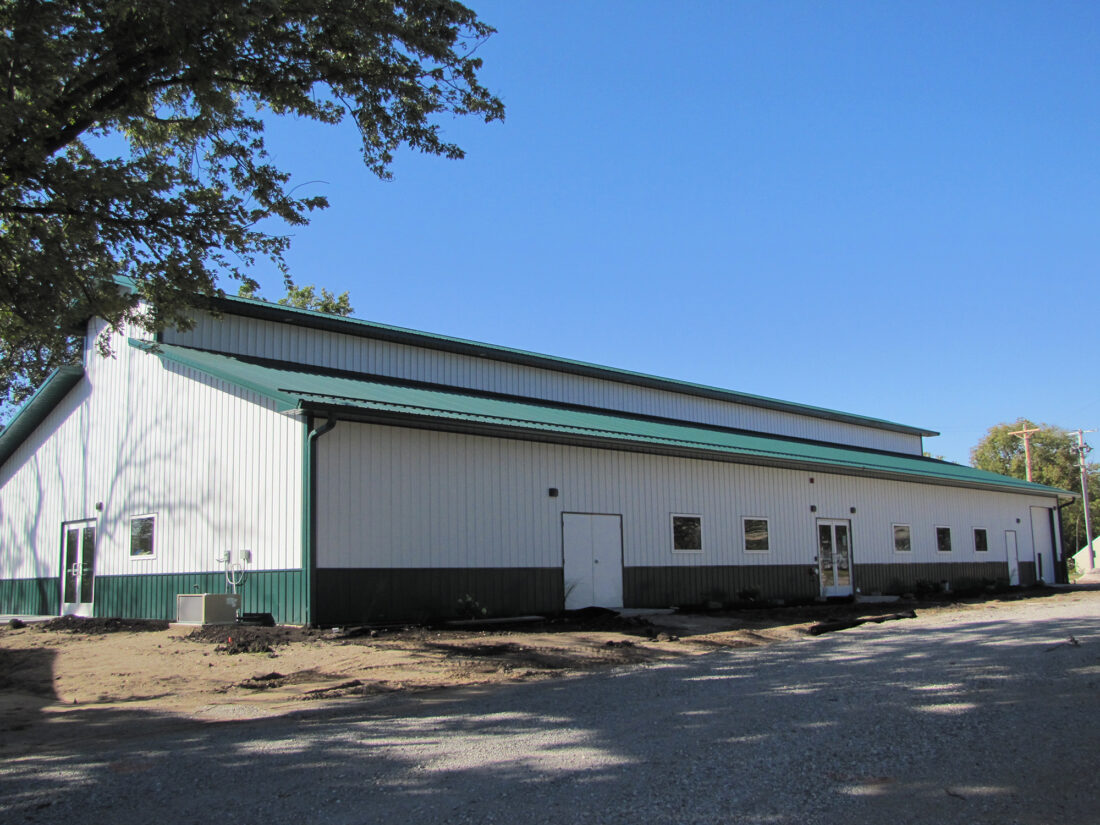
—Daily Freeman Journal photo By Lori Berglund<br> The Career Ag Academy is now open for classes each school day on the Hamilton County Fairgrounds. The new building includes both classroom and live animal space. A public open house is expected later this spring.
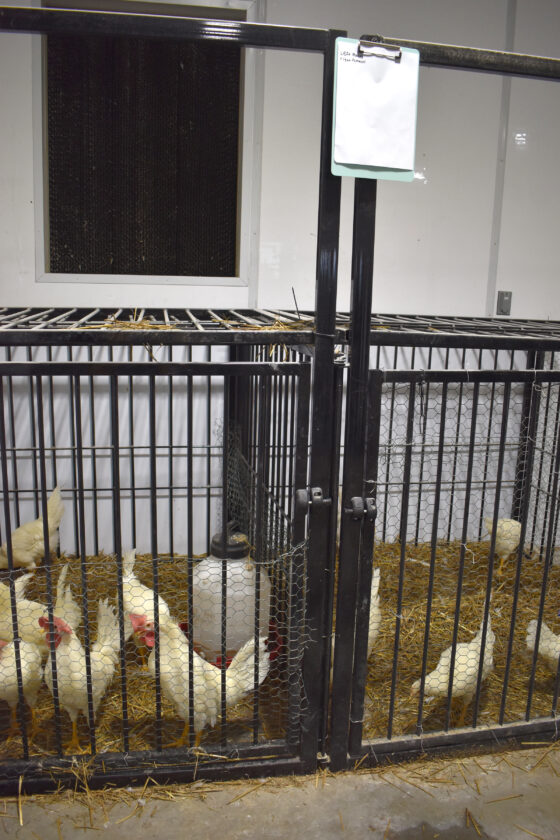
—Daily Freeman-Journal photo by Kolleen Taylor <br> The students are responsible for the chores needed to sustain the animals in the building. Two groups of chickens are separated in the cages; students made sure to label the two sets, left: male, right: female. This underscores the need for educating the youth in basic farm knowledge, by showing the difference in appearance of the male rooster, versus an egg laying hen.
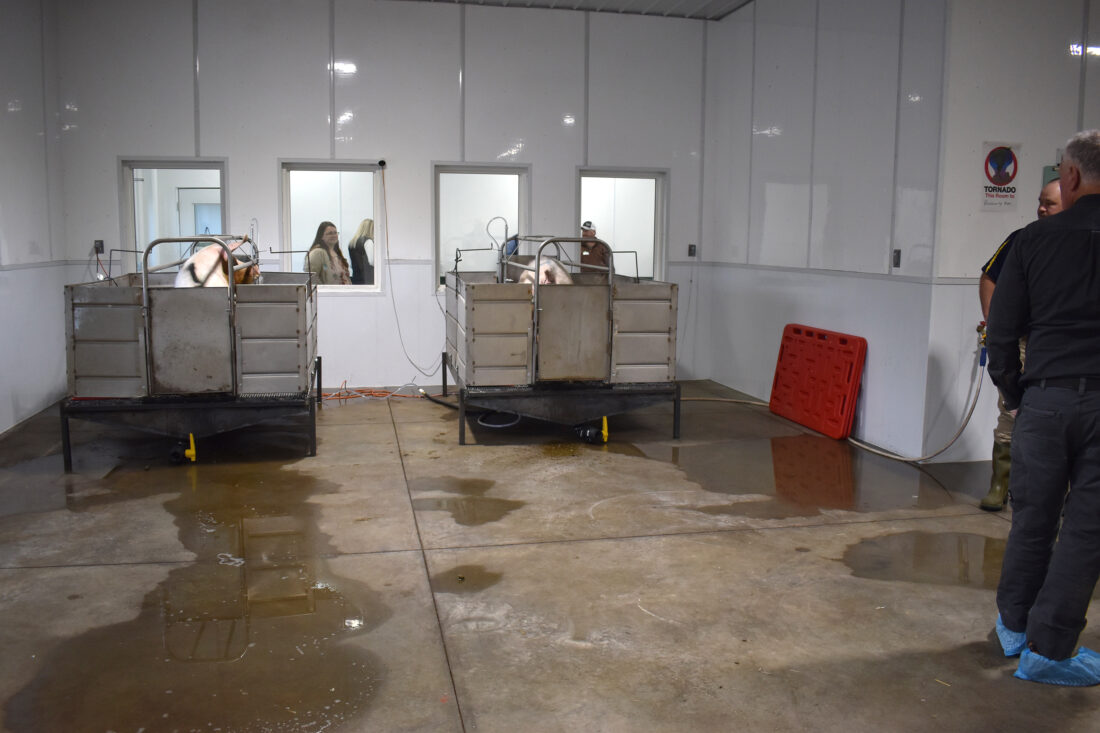
—Daily Freeman-Journal photo by Kolleen Taylor<br> Two very pregnant sows are in farrowing stalls in the livestock area, with birthing expected to be soon. The academy has cameras trained on them that allow students and the instructors to monitor them while not in the facility.
—Daily Freeman Journal photo By Lori Berglund<br> The Career Ag Academy is now open for classes each school day on the Hamilton County Fairgrounds. The new building includes both classroom and live animal space. A public open house is expected later this spring.
—Daily Freeman-Journal photo by Kolleen Taylor <br> The students are responsible for the chores needed to sustain the animals in the building. Two groups of chickens are separated in the cages; students made sure to label the two sets, left: male, right: female. This underscores the need for educating the youth in basic farm knowledge, by showing the difference in appearance of the male rooster, versus an egg laying hen.
—Daily Freeman-Journal photo by Kolleen Taylor<br> Two very pregnant sows are in farrowing stalls in the livestock area, with birthing expected to be soon. The academy has cameras trained on them that allow students and the instructors to monitor them while not in the facility.
Trending
If it seems like the new Career Ag Academy at the Hamilton County Fairgrounds went up quickly, just ask any of the board members who have been working toward this goal for more than 10 years.
A small group of agri-business leaders began meeting and brain-storming as early as 2014 on the possibility of a place to educate high school students on career opportunities in agriculture.
The new academy opened at the start of the 2025-2026 school year in a brand-new building that includes modern classrooms, a live animal area, a meat lab and meat cooler, on the northwest side of the fairgrounds.
"We're still on a learning curve," said Gene Gourley, life-long Hamilton County pork producer and board member for the academy. "Our goal is to give students exposure to all kinds of careers."
Growing good citizens is a philosophy often reiterated by supporters of the academy. Since its inception, the board has included a cross-section of producers and business people who see the careers available and want to foster an interest in agriculture in a new generation.
The late Webster City Mayor Phil Voge, who built his own successful business career in animal agriculture at Webster City Custom Meats, was an early promoter who saw the value of such an effort. Other board members have included such notables as another former Webster City Council member, Dean Bowden. Others who have been active over the years include Adam Richardson, Zach Sukraw, Gerry Gourley, Holly Weisberg, Steve Stokes, Kurt Veldhuizen, Matt Berninghaus, Afton Holt, Kyle Swon, Zach Chizek and Shayla Troendle, secretary.
The project has required cooperative efforts from a multitude of agencies, including the Hamilton County Fair Board, Webster City Community Schools and the Career Ag Academy board. The Academy operates as a 501(c)(3) entity, owning the building and leasing the land from the Hamilton County Fair Board. In turn, the Academy leases the facility to Webster City Schools, which provides the programming for students.
Veldhuizen is the agriculture instructor and FFA advisor who oversees the program for Webster City High School.
As the veteran teacher has explained previously, the curriculum for the academy begins with basic veterinary science classes for the lower high school grades. Upper class levels study Advanced Animal Production and learn responsibility by taking on the work of daily chores, during the school week and even on weekends.
It is not strictly about animal agriculture production, but the whole sea of careers that support the industry that puts affordable protein on the table in the United States, and even throughout the world. Bankers, lawyers, veterinarians, and so many more careers are touched by animal agriculture. But few students in today's world have access to hands-on experience with live animals. The academy is a game-changer in that area.
The Ag Academy creates that connection and seeks to inspire an interest for the future.
Throughout the year, a variety of animal species will be part of the curriculum, from sheep to hogs, to poultry and more.
"We just moved in two sows and those will be ready to farrow very soon," Gourley said.
Upper classrooms will also learn biosecurity measures that could apply to any area of scientific research. The academy uses a Danish system for biosecurity. A bench divides the live animal areas and students sit on the bench to remove their street shoes. They then swing their legs over the bench, don coveralls to protect their street clothes and put on boots that are worn only in the live animal areas. Students reverse the process to maintain biosecurity as they leave the live animal area.
A shower is also available if a student so wishes before returning to school.
With guidance from their instructor, students care for the animals and hopefully learn the full life cycle, even including the business cycle that includes sale of the animals as they become part of the food chain, offering affordable protein.
"This gives students exposure to live animals that teaches so much more than a picture on a screen," Gourley said.
"We can hopefully build a passion, show them the different jobs available, and keep as many kids local as possible."
Through education, students of the Ag Academy will learn more than just how to care for animals. They will learn the role of animal agriculture in the Iowa economy and the family table.
"We want all of these students to become good citizens," Gourley added.
The goal of the Career Ag Academy is to show students that a full range of careers is available and that they don't have to move far away to make a good living. Through this effort, the Career Ag Academy is fundamentally seeking to grow the community for the long-term future.
A grand opening is expected in the spring so that the public can get a better look at the new Career Ag Academy, according to Gourley.