
Some mid-winter fishing thoughts
A glance out the window of my central Iowa home reminds me that this isn’t open water fishing season. The wind and snow limit visibility so travel isn’t recommended, and it’s too cold to leave the house anyway. It’s times like this that I daydream about fishing in warm weather. Following are some fishing things that have my attention.
The more time that I spend on the water, the more I realize that the water has changed. In quite a few places, the water is clearer and the vegetation is deeper. Invasive species like zebra mussels have found homes in lakes where they didn’t used to live. These little mollusks filter sediment out of the water, which makes the water clearer and allows sunlight to penetrate deeper. More sunlight reaching deeper water encourages vegetation growth. The water entering the lakes from shoreline homes and buildings is also cleaner, which usually means clearer lake water.
Clearer water usually changes the way we fish. When the water is clear, the fish often are deeper. Where we used to fish the weedline in 8 or 10 feet of water, the weedline is now in 15 or 18 feet of water. If we want to get bit, we need to fish deeper, especially during mid-day. Early and late in the day when the light is lower will often be when the fish are most likely to bite.
The lures that we use in our attempts to get a fish to bite have changed significantly. Live bait is still the go-to for many, especially when the bite is tough. But more and more, anglers are learning that artificial baits can increase our fish catches. We’re also learning that just because a particular bait was productive on our last fishing trip last doesn’t mean that it will be productive today.
Sometimes new bait types, baits that the fish haven’t seen, will out-produce the old standbys. A good example is a bladed jig type of bait. A bladed jig is kind of a jig/crankbait combination. A Thunder Cricket is a good example of a bladed jig. Thunder Crickets were designed mostly with largemouth bass in mind, but anglers who have used these baits will attest that walleyes and northern pike are very willing to eat them. Anglers should be willing to try new things when it comes to fishing, and these mid-winter days are a good time to be researching new baits and ideas.
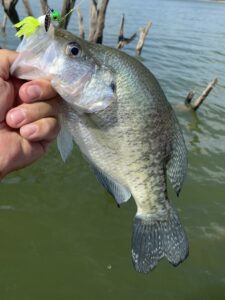
Anglers often develop a fondness for a certain species of fish. If you truly prefer a particular species of fish, go for it. Fishing is something that is a very individual thing, and we should fish the way we want to fish. But many anglers have learned that variety is a good thing and can make our fishing even more enjoyable. When your favorite species doesn’t want to get caught, go after something else. In most bodies of water, there will be a type of fish that is more willing to provide action than our target species. If the walleyes don’t cooperate, tie on a bass bait, a panfish bait, or a northern pike bait and see what happens. Often you’ll find someone willing to bite.
And, if you’re committed to catching a particular species, try a different presentation. If the bass won’t eat your crankbait, try a jigworm. A different look will often be what it takes to get them to bite.
I just looked out the window again. It’s still cold and windy, but the snow has stopped. Visibility is good. I think I’ll go ice fishing.
Local Columns
Blizzard impacted paper delivery, but subscribers could still read the news
Winter wasn’t done with us yet. After we were teased with some beautiful sunny 60 degree days Mother Nature ...
The challenge of small cars and ceiling fans
Several years ago a Facebook friend who is a past schoolmate from the mid-1950s sent me some copies of yearbook ...
A force of nature has come to a halt
For some people, it takes a force of nature to get motivated. For others, like Bob Erickson, it took a force of ...
Annual D/SAOC cake auction is about to begin
No one ever thinks it will happen to them. And then it does. Domestic abuse is talked about openly today, and ...
My favorite bait
Enjoying a non-irritating retirement
Compared with a lot of men, I’m a rather boring guy. I have no major hobbies. Many men enjoy golfing. I tried ...