
Step by step
McNiel making progress on downtown building
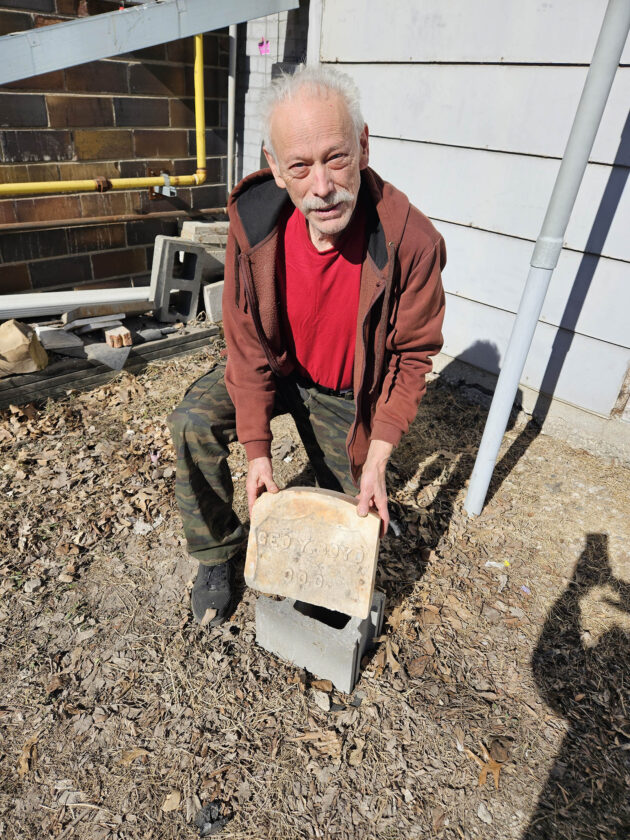
— Daily Freeman-Journal photo by Kolleen Taylor<br>One of the many artifacts discovered in the building when McNiel took over ownership, was a buried Civil War headstone that was likely broken during the process of creating these markers for every veteran who served during the war between the states. The building was originally owned by a gravestone company.
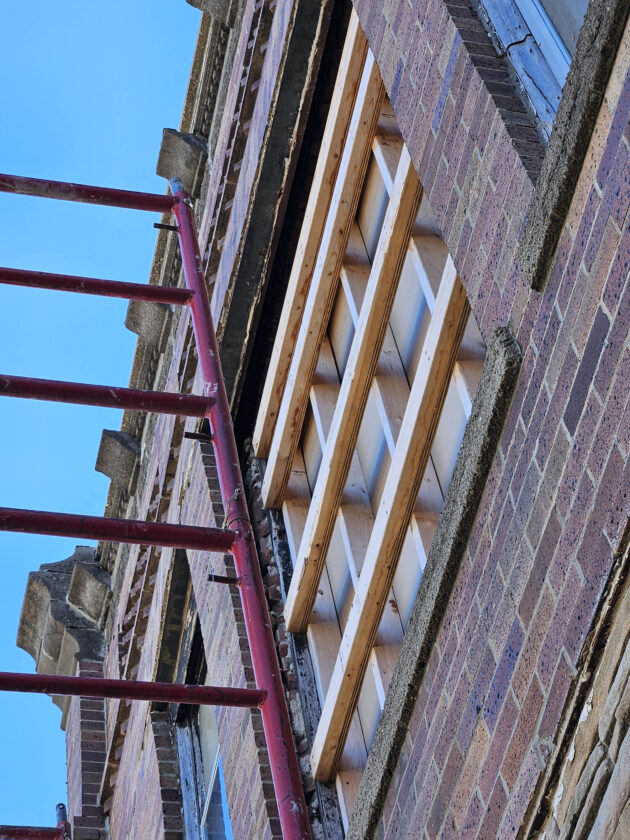
— Daily Freeman-Journal photo by Kolleen Taylor<br> One step Chris McNiel took to stabilize the front of the building was to reinforce the over-sized second floor window. The two by fours used that are visible from the street was a key step he took for safety and to reinforce the facade.
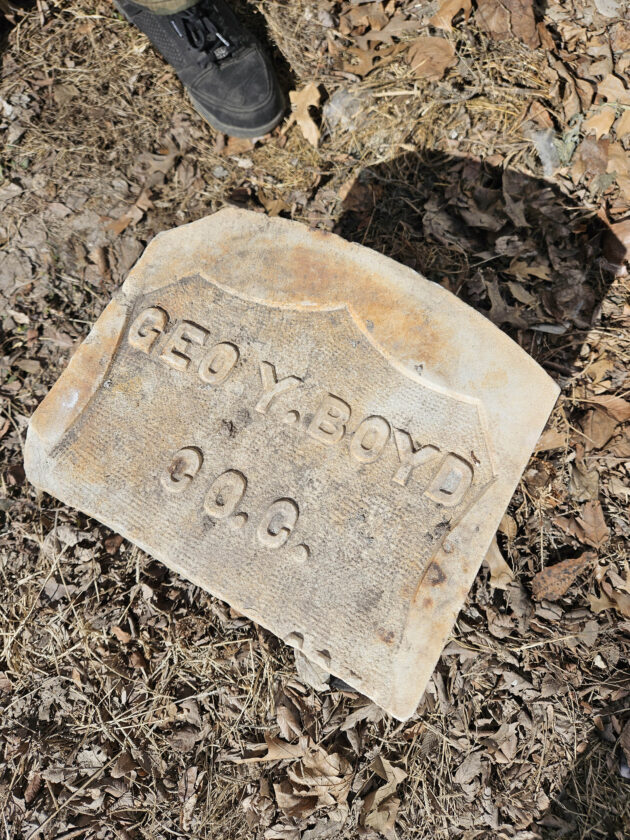
— Daily Freeman-Journal photo by Kolleen Taylor<br>A closeup of the masonry stone unearthed on the McNiel property, shows the name Geo Y. Boyd….assuming it is George Boyd, who had served in the Civil War in Company C.
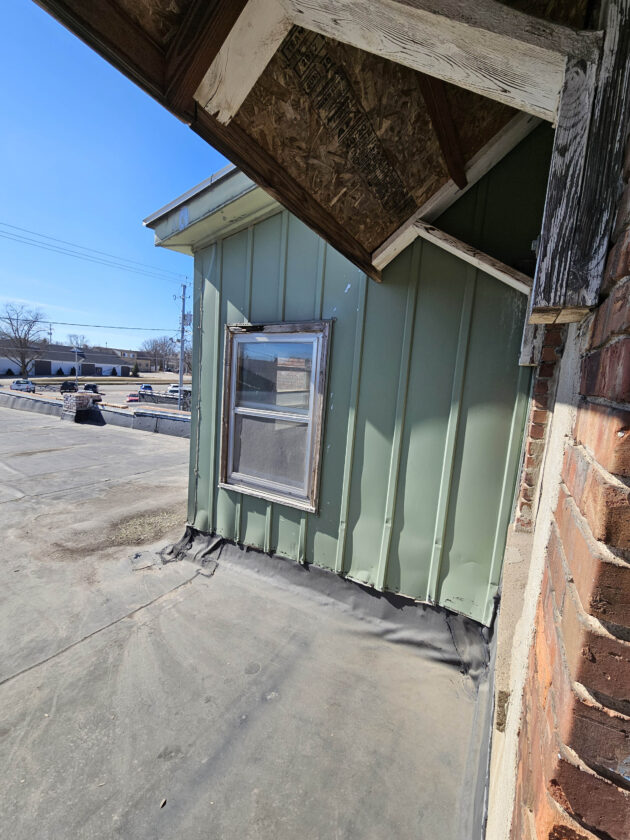
— Daily Freeman-Journal photo by Kolleen Taylor<br>This second floor addition was built directly onto a roof that was never meant to sustain the weight of a second floor. This will be removed later this year to allow additional repairs on both the McNiel property and for continued work on the Dawson building located adjacent and west of it.
— Daily Freeman-Journal photo by Kolleen Taylor<br>One of the many artifacts discovered in the building when McNiel took over ownership, was a buried Civil War headstone that was likely broken during the process of creating these markers for every veteran who served during the war between the states. The building was originally owned by a gravestone company.
— Daily Freeman-Journal photo by Kolleen Taylor<br> One step Chris McNiel took to stabilize the front of the building was to reinforce the over-sized second floor window. The two by fours used that are visible from the street was a key step he took for safety and to reinforce the facade.
— Daily Freeman-Journal photo by Kolleen Taylor<br>A closeup of the masonry stone unearthed on the McNiel property, shows the name Geo Y. Boyd….assuming it is George Boyd, who had served in the Civil War in Company C.
— Daily Freeman-Journal photo by Kolleen Taylor<br>This second floor addition was built directly onto a roof that was never meant to sustain the weight of a second floor. This will be removed later this year to allow additional repairs on both the McNiel property and for continued work on the Dawson building located adjacent and west of it.
Trending
It's been seven months since Chris McNiel saw the barricades go up around his building located in the 500 block of downtown Webster City. Progress is being made, but there is still a lot of work and some frustration as McNiel works to save his building.
A walk through of the building shows a lot of work in progress, most of it is structural, work that can be done from the interior between paying jobs. The harsh and early onset of winter prevented much exterior work to be done, although he was able to hire masons who did a thorough job of tuck-pointing about one-third of the east wall.
"We've done emergency tuck-pointing on the remainder," he explained. His next step will be building a temporary restraining structure for the facade.
"It's had some tinkering way back when," he explained. "It was pretty beautiful."
The restraint is a safety precaution, he continued, similar to the restraint used on the Webster Theatre.
"The facade will have to be dismantled and rebuilt, eventually," he said, "and I have a plan for that."
The weather conditions this winter prohibited him from working on the north side, with the winds and cold hitting early and staying most of the last five months. With the barricades still in place, working on the north side is still challenging.
John Harrenstein, city manager for Webster City, sympathized with the challenges facing property owners like McNiel.
"There is an implicit tension between building owners facing repairs and the safety requirements around it," he said. "The city has taken a very flexible approach to the properties who have tried to address the structural issues. The issues surrounding the removal of barricades is this: If the work satisfies our building code, they will come down."
McNiel is a Webster City native, graduate of Webster City High School, and is an experienced electrician, plumber and engineer. He has been quietly working when he can to shore up the problems a lack of knowledgeable building maintenance had created.
These were not problems McNiel created, but they are the problems he has inherited, as he chose to purchase the 518 and 520 buildings at a price he thought was better than constructing a pole building to serve his storage needs. The two buildings, he explained, were originally one building.
The building housed the former Monroe Office Supply business, which specialized in office equipment. Built in 1890, according to the Hamilton County Assessors page, McNiel has uncovered bits of history throughout the building, including a grave marker from the Civil War.
"It was originally the Graves Monument Company," he explained. "After the Civil War ended, every Civil War veteran got a Civil War grave marker."
The marker he discovered was buried in the earth, and they located it while working around the building. "Geo Boyd" was the name engraved on the short white granite rock.
McNiel knew the building needed a lot of work when he purchased it. He didn't know he had such a short timetable to correct the many problems. A certified electrician, plumber and engineer, he does most of the work himself, guiding people he hires to help with specialized tasks. McNiel has enough engineering knowledge to know he had to address the most critical aspects to keep the building together.
The first step was to clean it out.
Hundreds of unusable typewriters and office machines were thrown into the second story of the building, which first had to be removed. Thousands of pounds removed took pressure off the support to the ceiling.
Additions to the building included a porch to the south built directly onto a roof. This spring, the first order of business will be to remove the porch and reinforce the roof so his neighbors can access the repairs they need to make on their building. The sun porch was too heavy for the roof support, and removing it from the original building will relieve some stress and allow them and the neighbors to access and repair their brickwork.
"We are trying to accommodate the neighbors so they can continue their tuckpointing." he explained. "They have been cooperative when I had to take down the chimney. I had to be on their property, now they need to use my building to access theirs."
It's a tedious project, each step has to be thoughtful for safe repairs and at a cost which would startle any businessman. Throughout the building he is reinforcing beams and timbers, and alleviate stresses on any areas which seem problematic.
"I'm trying to operate a pretty thriving business and take care of these things," he said, "but when you get into these old buildings, it's a different process, a different procedure for repairs."
McNiel is working with Harrenstein, Ariel Bertran and the inspection department, and admitted he is developing a good relationship with them.
His frustration comes from an engineering report that exists.
"They want to follow an engineering report which is errant, speculative and does not truly address the needs of the building," he said. The report, he further explained, does not take into account that the building is 135 years old, and following engineering guidelines established for new construction is pretty impossible.
And it would be the same problem for every building of that era in the community.
Harrenstein said this is all a balancing act.
"In my position, I encounter all ranges of opinions. The way we are acting is to be responsive to all."
McNiel is quick to say that his age is not making the project easier, but he has intentions of getting as much done himself, so that a future owner can use it for retail, a service business or other type of offices. He doesn't have a team of investors or a huge crew to help him. For now, he is doing as much as he can as quickly as he can to be compliant with the city, and be a good neighbor.
He still needs time, and of course, the money that it takes to complete the work.
It's a goal that is unselfish, repairing the building for the future and helping to keep the downtown district alive.
It's efforts like McNiel is making that takes the doom and gloom away from the downtown.
"People can be encouraged," said Harrenstein. "A lot of people are engaged."
It's that engagement that can make the difference.