
Work the weedline
Trending
For many of us, the 2026 open water fishing season is in full swing. As in previous open water seasons, some anglers are promising themselves that they're going to add a technique to their fishing in an effort to catch more fish.
Versatility is a quality the most successful anglers possess. Versatile anglers are generally more willing to try new techniques and are also willing to chase different species of fish. They want to get bit.
We might really want to catch walleyes, but at times, in some bodies of water, the largemouth bass might be biting a lot better than the walleyes. Keep your options open when you go fishing. If you do, you'll catch more fish.
When you start your day of fishing, it's important to have a game-plan in place. If walleyes are today's target, in many places you should have a rod with a bottom-bouncer and spinner rig ready to go. This set-up is a good summertime bet for walleyes.
Keep a close eye on your sonar for fish activity. If you see what you believe to be walleyes, give them plenty of chances to eat the spinner rig.
If you work your bait through a school or two of fish with no action, try something else. Maybe a live bait rig worked slowly through the suspected walleyes will trigger them into eating. Or maybe a crankbait will do the trick.
Maybe not though. If you're dead-set on catching walleyes you can keep trying other techniques. But if you just want to get a bite, now would be a good time to switch species. Many of the best walleye lakes are also good for bass, panfish or pike.
If something pulling on the end of your line is the goal, tie on a different bait and go to a different area of the lake. A weedline would be a good place to start. The weedline is home to all species of fish, and often the fish on the weedline will be aggressive biters.
If you've reached the point where you just want to get a bite, tie on an eighth ounce jig with a Ned Ocho. Anything that swims along a weedline will eat this combo, including panfish, bass, pike, even those walleyes we were looking for in deeper water.
If the bite is good, go to a bait with a larger profile. A Rage Menace Worm would be a good choice. This bait is larger and has twin action tails. You won't get as many panfish pecks with the larger bait, and it will be more appealing to bigger fish.
We're going to be casting. Watch your line carefully as the jig falls along the weedline. Much of the time you'll just see your line "jump" a little. Reel down and set the hook. That "jump" was caused by a fish eating your jig/plastic.
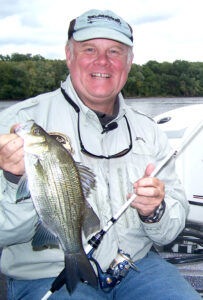
Being a versatile angler can provide lots of fond memories. I recall many days when our target species wouldn't cooperate, but a different species would. There were days on the Mississippi River and in South Dakota when white bass saved the day. In other places, when a cold front rolled through, northern pike were willing to eat bait when the walleyes wouldn't.
For most of us, feeling a tug on our line is the reason we go fishing, and much of the time you'll feel that tug along the weedline. And you never know what might bite your bait on the weedline. Maybe it will be a few of those walleyes you couldn't get to bite in the deeper water.