
Japanese beetles invade area gardens
Horticulture Hints
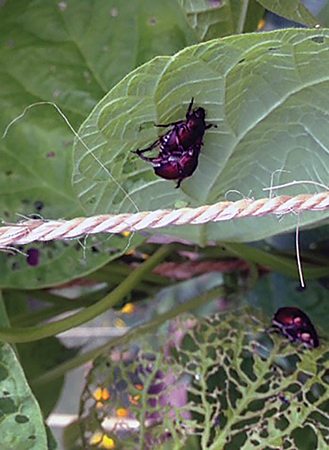
Japanese beetles have long been known to be present in eastern and southern Iowa gardens, causing damage to plants for several decades. Several years ago, these beetles first began appearing in Webster County. Japanese beetles have now also been found in Hamilton and Humboldt County gardens.
First arriving in New Jersey in 1916 from Japan, these beetles have journeyed throughout the country. In the 1970’s Japanese beetles were first found in Cedar Rapids for a short time but then disappeared. In 1994, the beetles then reappeared in Scott County, and began to spread across Iowa. A few of their favorite foods include roses, grapes and linden trees, but they can be found feeding on the leaves, flowers and fruits of over 300 plants.
Similar to a June bug, Japanese beetles are about 3/8 inch long and have a metallic green head and thorax with coppery colored wings. They can be identified by the row of 5 spots of white hair tufts found along each side of their lower abdomen.
In late June, Japanese beetles emerge as adults after overwintering as grubs in the ground. They begin feeding on plant foliage, chewing out the tissue between the veins, leaving leaves with a lacelike or skeletonized appearance. Adult Japanese beetles live about 30 to 45 days, and can completely defoliate plants if left uncontrolled.
Handpicking Japanese beetles or knocking them into a bucket of soapy water may provide adequate protection when beetle numbers are low. The presence of beetles will bring more of these uninvited guests to your garden as they emit a pheromone attractant, so immediately remove any beetles when first noticed.
Many chemical controls, such as Sevin or Eight insecticides, are labeled for use against adult Japanese beetles. But these chemicals when applied to plants can also harm bees and other pollinators that feed on pollen and nectar of flowers. Always read and follow label directions and check for safety precautions when applying to food crops, note the number of days required between application and harvest date.
Did you know? For a botanical approach, products containing Neem or Pyola (pyrethrins in canola oil) may deter Japanese beetles for about 3 or 4 days. Insecticidal soaps, hot pepper or garlic sprays are usually ineffective.
Questions? Contact McCormick at yvonne@iastate.edu for information or advice.