
Kantor Avenue to remain closed; bridge built in late 1880’s
Trending
Nearly every chair was filled at the Hamilton County Supervisors meeting on Tuesday, with the majority of the county residents attending there to learn more about the closing of the Kantor Avenue bridge east of Briggs Woods.
The topic of the bridge condition was addressed with a carefully prepared presentation by Ryan Weidemann about the bridge in Independence Township. According to Weidemann, there have been efforts to have the railroad replace the bridge. All those efforts failed.
Weidemann's presentation included the survey which has been on the county website for the past few months. A total of 34 individuals took the survey, which revealed that 44% said they use the crossing daily, while 29% use the crossing weekly. 29% of those who responded use the route to commute to work, 29% use it for their agriculture operation. The amount of time the detour has cost those living in the area ranged from 5 minutes to 45 minutes.
And there isn't a lot to be done.
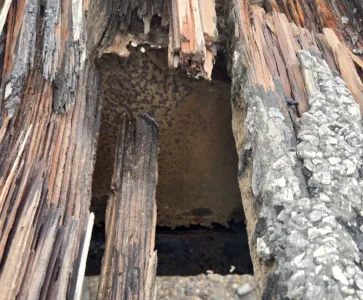
The bridge, according to Weidemann, which was built in the late 1800's, is owned by the railroad, Union Pacific.
"Union Pacific owns the bridge," said Weidemann. "They will not repair the bridge."
And they will not allow the County to make physical repairs to the bridge. And, as Weidemann explained, "The Union Pacific Railroad has clearly communicated to us they will not make future repairs to the bridge."
Weidemann presented five options to the Supervisors:
#1. Do nothing – permanent closure : Union Pacific owns the bridge and will not make repairs for reopening, they will oppose any future crossings at the location, and in a few years, when the existing structure will pose a hazard to the railroad and they will remove it at their expense.
#2. At Grade Crossing: Union Pacific opposes this option, and cost would all be on the county, including requiring active signals, that apparently is a significant expense that would all be on the county. This also greatly increases the chances of vehicle/train collisions.
#3. At grade access to Highway 20 from Kantor Avenue. The Iowa Department of Transportation does not allow the addition of an at-grade intersection in Hamilton County.
#4. Replace bridge on current alignment: Would require purchase of 13 acres of permanent easement from landowners, requires about 190,000 cubic yards of imported fill material, creates a potential hazard for vehicles stopping on the east side during winter. The estimated cost of about $7.1 million in 2026 dollars, however, a bridge replacement cannot be completed that quickly, and is estimated it would likely take until 2036, and cost with inflation would be well over $8 million.
#5. Replace bridge on new alignment. Funding this project would mean no other bridge replacement projects would occur for around 10 years.
Weidemann said after the meeting that there are not many options. They will be looking at replacing a bridge, but have to determine a way to pay for it.
"The way forward is to look for funding and provide the options and risks to the supervisors,"
Weidemann said. "There is a significant cost in doing that. The costs and the risks need to be considered at a later date."
He also said the survey gives an indication of the impact, and they need that type of information to be considered for any grants, but he knows not everyone affected responded to the survey.
"I tried to do the best I could in getting the survey out, getting the different people to respond," he said. "It's my belief, the best chance for this project to succeed is grant funding. In order to build a better picture for grant funding, we need to build a case for it."
More than twenty people attended the meeting Tuesday listening to his presentation to the Supervisors.
"I was encouraged by the number of people who came, and who followed up," said Weidemann. "I've seen the challenge with the Williams Bridge, everything was going for that. This bridge is going to be more of a challenge, and doing a project with the railroad takes years."
He also cautioned on understanding the cost of a bridge in the future.
"The numbers I gave are in today’s dollars. It's not going to be built this year," he explained.
There is no quick fix for this bridge, no solution for the road closure. Those living and working along this area will need to be patient, he said.
"I started on the Williams (bridge) project in 2020, it will be 2030 before it's finished."