
Iowa Ag Secretary Mike Naig visits Storm Flying Service Thursday
Demolition, construction, CMAR management
Trending
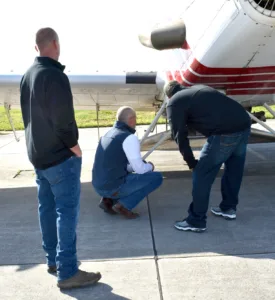
Blue skies, and combines working the fields greeted Iowa Ag Secretary Mike Naig Thursday as he took a close look at the Storm Flying Service service to plant cover crops in the area.
Steve and Mike Luedtke met Secretary Naig on the runway early Thursday, with the plane they use available for discussion about the fall process of planting cover crops.
The Luedtke's purchased the operation from Ralph Storm in 2013.They also manage the Webster City Airport, located south of Webster City.
The purpose of the visit was to encourage farmers to plant cover crops even though the harvest season has been stretched out with the September rains.
"We are really promoting the planting of cover crops," said Naig. "We had a record year of enrollment, with 1.4 million enrolled this year, it was a banner year." That, he explained was twice as many participants as last year.
Mike Luedtke said the rains impacted their ability to plant the cover crop also.
“We had a very short window to get stuff done,” he said.
It was an educational opportunity for Naig as he spent most of his time in Webster City learning from the Luedtke brothers about their operation, their plane, and the success of the crop seeding program that they have implemented in the area.
The cost to plant by air runs about $12-$15 per acre, according to Steve Luedtke, with seed ranging between $20 and $30 per acre. The plane carries about 3,000 pounds of seed at a time.
Incentives to plant a cover crop have increased significantly over the past few years. Naig said that many farmers don't sign up because they don't want the extra paperwork, and don't want any extra expense.
"We have had some interest in the stackable programs," said Naig. "A year like this we saw double the enrollment," said Naig.
There are multiple programs encouraging conservation farming techniques, such as this through not only the USDA, but also through other agencies, and environmental groups.
"We do want to encourage folks," said Naig. "You don't need to know the ins and outs of the conservation programs." He said the County Conservation offices and the USDA can direct and assist farmers who want to know more about the water quality programs and conservation efforts.
Those who participate in conservation programs benefit in multiple ways. One of the ways farmers benefit is the reduction of crop insurance by $5 per acre to those who sign up for the programs. It's automatic, no paperwork involved, he explained.
"The crop insurance incentive is in its 10th year," he said. But there are other reasons for looking at these programs.
Naig said the soil health improves over time, the cover crop breaks up the compaction, and for those who plow and disc their fields, the fuel savings is significant.
"If you ever thought about conservation or no-till planting, this is the year to try it," said Naig.
Farmers can plant cover crops this fall, then enroll those acres when the online application window opens December 1, he said.