
Generations of service
Grandfather gave life in line of duty
Trending
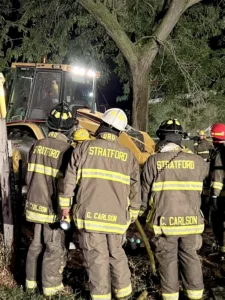
STRATFORD -- Every time Grant Carlson responded to a call for the Stratford Fire and Rescue Department, he was carrying on a family tradition. Sixty-four years ago to the month, the Stratford community mourned the death of Carlson's grandfather, Carl Harold Larson.
Like Carlson, Larson was a long-time chief for the Stratford volunteers. On Sept. 21, 1962, he responded to a fire in a pile of lumber at the co-op elevator. The fire had been almost entirely put out when Larson collapsed, according to news reports at the time. Fellow firefighters began immediate life-saving measures, but he was not to be brought back. The Hamilton County medical examiner ruled that it was likely a sudden heart attack.
Larson was just 50 years old at the time of his death and, like his grandson, was active in a number of community activities. He operated the Stratford Locker and served as state locker director for several years. Larson served as a civil defense deputy and was active in the Stratford Commercial Club, Izaak Walton, and several community groups.
For many years, Larson's death was considered just a natural death. Only in recent years have cardiac deaths been ruled as line of duty deaths, according to the Iowa Firefighters Association. About two years ago, Larson was recognized as a line of duty death by the Association and was honored at a ceremony at the Firefighters Memorial in Coralville.
Cardiac events are actually the leading cause of line of duty deaths for firefighters, but those deaths don't always occur while actively fighting a fire. While individuals may have underlying health conditions, the National Institutes of Health and National Fire Protection Association state that the sudden rush of adrenaline, combined with exposure to toxins, physical strain, and emotional stress, elevate the risk factors for all firefighters.
The increased risk for cardiac events continues for at least a full day after a fire fighting event concludes. For that reason, monitoring of firefighters, checking in to make sure they are doing well after a call, is strongly encouraged by firefighting associations.
It's just another, often unnoticed, price of answering a call -- rushing in to help while others are rushing out.