National Vietnam Veterans Day is this Sunday
-
-
Submitted photo
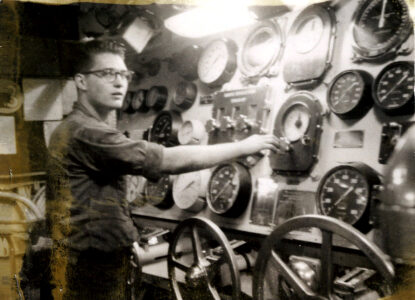
During the Vietnam years, Ron Phelps was serving on a ship in the U.S. Navy. This is a photo Phelps has kept from those years that shows him working in the control room.
Submitted photo
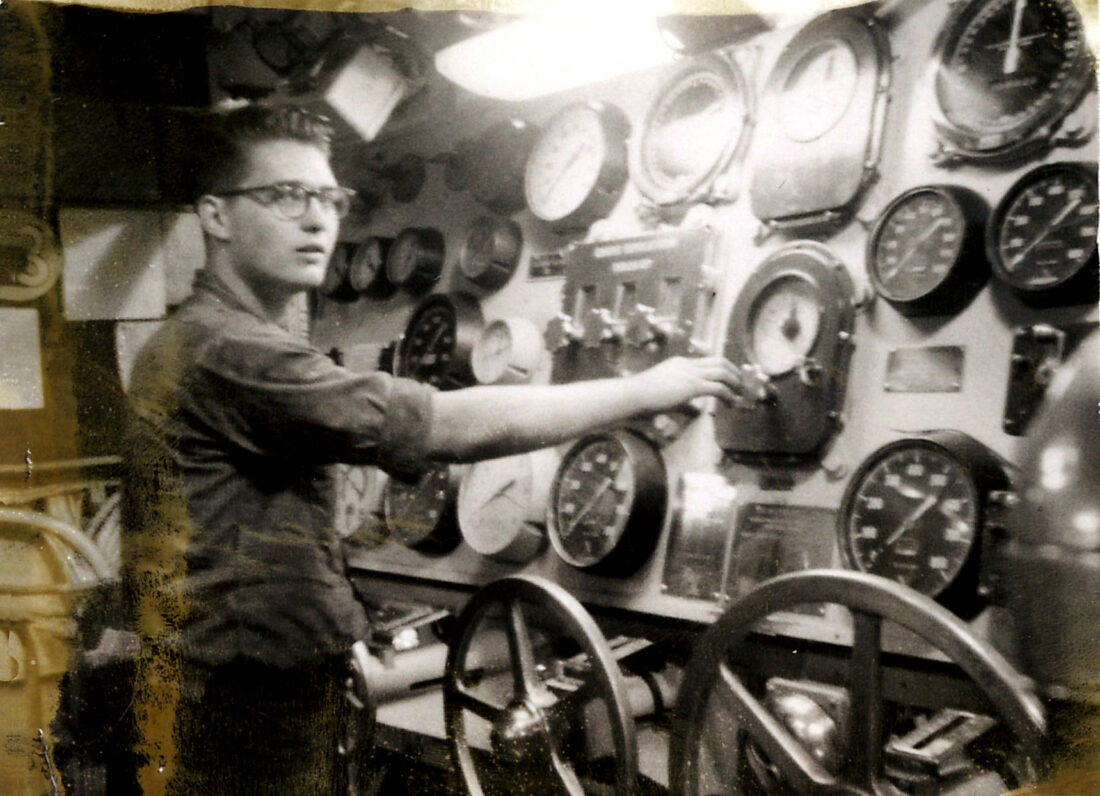
During the Vietnam years, Ron Phelps was serving on a ship in the U.S. Navy. This is a photo Phelps has kept from those years that shows him working in the control room.
Sunday is marked as National Vietnam Veterans Day. It is a day to honor the legacy of the men and women who served during the Vietnam era and to show appreciation for their service.
The date is significant because March 29, 1973, signaled the last combat troops to leave Vietnam and also the day Hanoi released its final prisoners of war. According to the Veterans Affair Office of Research and Development and according to federal law, the military involvement began in February 1961 and ended in May 1975. During this time frame, approximately 2.7 million Americans served their country with more than 58,000 killed and an estimated 300,000 wounded. The names of those killed in action or missing in action appear on a monument dedicated on Veterans Day in 1982.
The U.S. Department of War states it is the most visited memorial on the National Mall in Washington DC with more than 5 million people paying their respect. While walking along the wall, visitors may find photos, letters, medals, flowers and other personal affects left as remembrances of those who succumbed to the war. The park service calls these donations and takes them, catalogs them and keeps the donations in storage.
Within the grounds are the Vietnam Women’s Memorial, the In Memory plaque, a flagpole with an etching of the insignia of the five branches of the military at the time and the statue of three servicemen.
Left to carry on after serving in Vietnam are not only the men and women in the United States who served but also the men and women who served from other countries and the people from Vietnam and surrounding countries who have also experienced the effects of war. Clearly the war continues to riddle veterans mentally and physically.
Because of the dense foliage, the US military authorized the use of herbicides. The U.S. Government Accountability Office state that from August 1965 to 1971, the Department of Defense–DOD used Agent Orange to destroy foliage thus exposing the enemy. According to this government department, DOD sprayed 11.22 million gallons of undiluted Agent Orange in Vietnam. Another 8 million gallons of herbicides were also used.
The most toxic was the Agent Orange containing dioxin, named because of the orange band around the barrel. Agent Orange was sprayed on the dense foliage by U.S. Air Force planes, helicopters, truck or by soldiers carrying tanks of the spray. It was not unusual to be in the area during the spraying or in the aftermath. Millions of veterans were either covered by the herbicides, breathed in the air or slept on the treated ground.
Two agencies expressed concern about the use of defoliants: the Federation of American Scientists in March 1964 and the American Association for the Advancement of Science in June 1964. But it wasn’t until the Department of Defense in 1968 announced a study to be conducted to determine the effects of the herbicides use that any action was taken to prevent the use.
No field studies were conducted in Vietnam. However, in April 1970, the Department of Health, Education and Welfare, the Interior and Agriculture called for the immediate halt “of the use of 2,4,5-T around homes, ponds, lakes, farms and food crops”. The Department of Defense also stopped the spraying in Vietnam and other countries at that time. While Agent Orange and other herbicides killed vegetation quickly, it has been slowly killing American Vietnam veterans.
After their tour of duty, millions of men and women returned to civilian life or continued to serve in the military. They received little fanfare or a welcome home. Organizations such as the Veterans of Foreign Wars and the American Legion initially refused membership for Vietnam War veterans citing it was only a conflict not a war. The VFW, American Legion and other veteran organizations have lifted the restraints and include anyone who has been honorably discharged from the military branches. Some veterans were spit upon, called names and were generally harassed when they landed stateside.
But no Vietnam veteran can bury the psychological scars of war nor can any veteran from any war. But the majority of Vietnam veterans are also carrying long term health effects from Agent Orange. On February 6, 1991, President George H.W. Bush signed the Agent Orange Act. This piece of legislation officially established presumptive health conditions for Vietnam veterans who were exposed to herbicides. The government discovered a large number of veterans were suffering from illnesses presumed to have been caused from spraying foliage in Vietnam and other named countries. The Veterans Administration has listed locations where veterans may have been exposed. In addition the VA has listed numerous “presumed” cancers and other illnesses caused by Agent Orange.
Many Vietnam veterans thought they had finished fighting the war but now find themselves fighting for their life again as Agent Orange keeps on giving. According to the federal government, an estimated 300,000 Vietnam veterans have died from the effects of Agent Orange. This number may not be accurate and difficult to maintain as not all veterans have notified or sought help from the Veterans Administration, Veterans of Foreign Wars or the American Legion.
March 29th is a day to honor the service of the living Vietnam veterans. One out of every 10 Americans who served in Vietnam was a casualty either killed or wounded. Vietnam veterans represented 9.7% of their generation. Today the percentage of Vietnam veterans is shrinking due to exposure to Agent Orange with an estimated 390 Vietnam veterans dying per day. Many are currently and quietly fighting the effects of Agent Orange on their life and losing the battle.
Remember their sacrifice. Recognize their contributions during and after the war. Support the Vietnam veterans by recalling their call to duty many years ago.
Local News
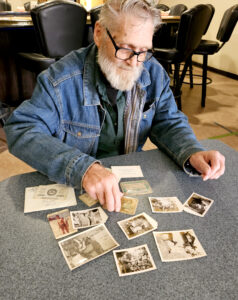
Webster City resident Ron Phelps served in Navy with two tours of duty in Vietnam
National Vietnam Veterans Day is this Sunday
D/SAOC cake auction starts today
One of the most important fundraising endeavors for the Domestic/Sexual Assault Outreach Center returns Thursday ...
‘Fiddler on the Roof Sr.’ tickets on sale
Webster City Community Theatre’s new senior theatre will be performing “Fiddler on the Roof Sr.” at 7 p.m. ...

New Reisner electrical substation celebrated with ribbon cutting Tuesday