
Hamilton County Conservation efforts show improvement in water management areas
-
-
Submitted photo
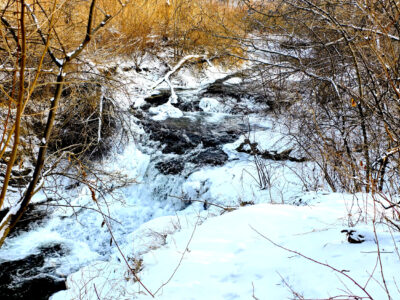
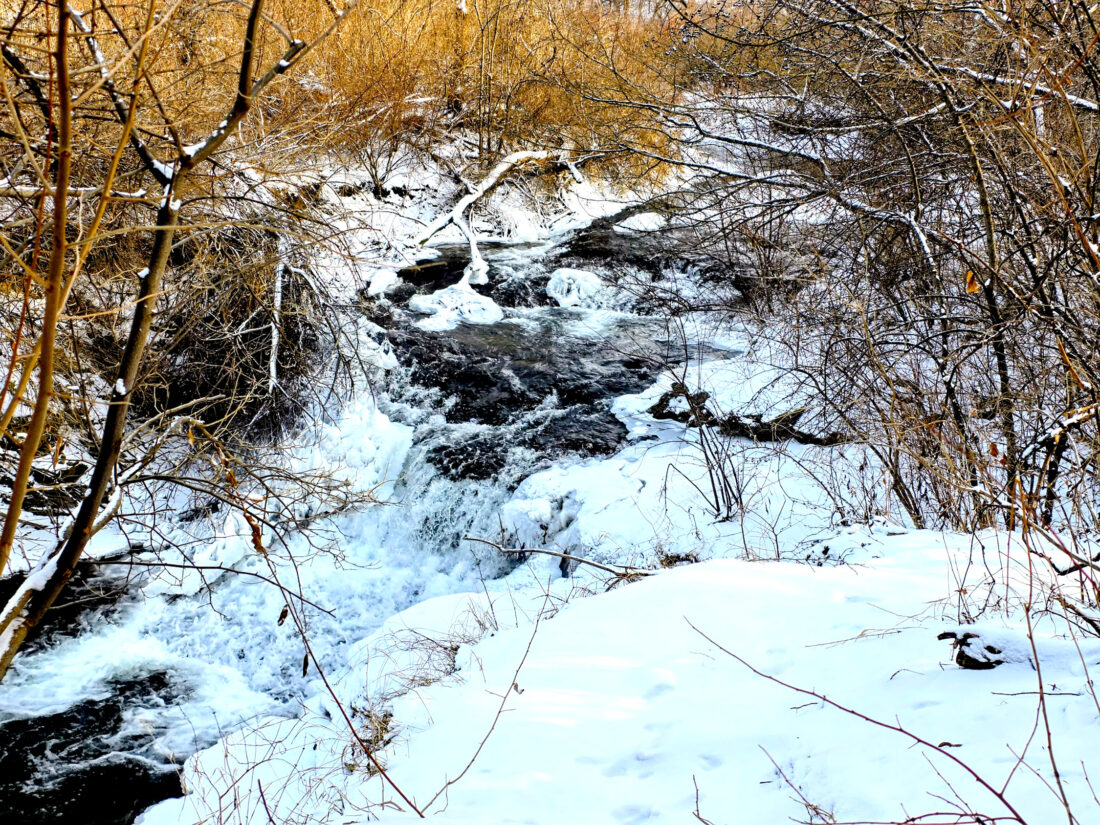
The beauty of the water falls in Briggs Woods has been a hidden treasure for many years. The efforts to improve the water quality in the Briggs Woods Watershed area make not only wonderful year-round scenery, but also tremendous improvements in fishing and the attrraction of other wildlife to the area.
-
-
Freeman-Journal photo by Kolleen Taylor
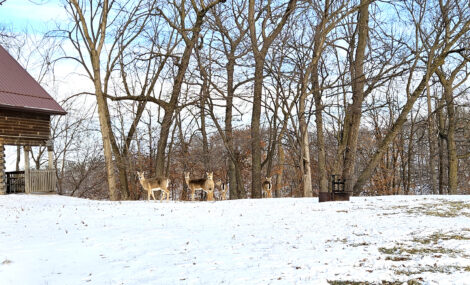
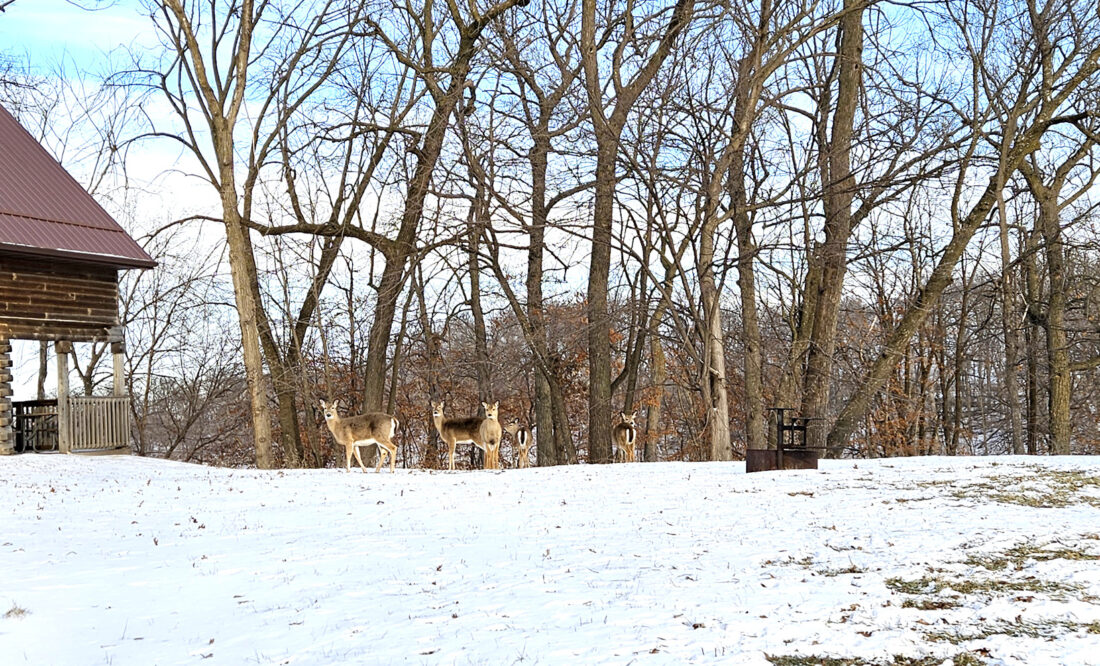
The wildlife enjoy the Briggs Woods park yearround. Work on the watershed and other conservation programs, make hikes through the woods an opportunity to experience the animals who need the habitat to survive. The consequences of ignoring water conservation efforts won’t just impact animals; humans need this to survive too.
Submitted photo
The beauty of the water falls in Briggs Woods has been a hidden treasure for many years. The efforts to improve the water quality in the Briggs Woods Watershed area make not only wonderful year-round scenery, but also tremendous improvements in fishing and the attrraction of other wildlife to the area.
Water is one of the most essential elements on earth today, and we often take it for granted. But the quality and quantity of water is becoming one of the most alarming issues of our day.
The Hamilton County Conservation Board – HCCB members and it’s director Brian Lammers have been addressing this for many years. They have been pro-active long before the politicians realized this is a real threat to the quality of our life, our food and our agricultural industries.
Everyone knows that you use water to clean things but how do you clean water?
At one point, the blame went only to the farmers; and often just to the farmers of Iowa. But water run-off occurs on every piece of ground we own; whether it is in a back yard, behind a retail store, in an industrial park, a residential area or a farmers field.
Lammers is involved with three different water management areas as part of his job in Hamilton County. Those three include the Ioway Creek, the Headwaters of the South Skunk River and the Boone River.
Freeman-Journal photo by Kolleen Taylor
The wildlife enjoy the Briggs Woods park yearround. Work on the watershed and other conservation programs, make hikes through the woods an opportunity to experience the animals who need the habitat to survive. The consequences of ignoring water conservation efforts won't just impact animals; humans need this to survive too.
This is just one of the tasks that the HCCB and other State and Federal organizations are faced with. One of the ways the HCCB has attacked this problem is by cleaning the water from the 7000 acre watershed that feeds Briggs Woods Lake.
Planning for the Briggs Woods Watershed project began in 1999 out of concern for long term management of Briggs Woods Lake. The HCCB and the Soil and Water Conservation District convened a public meeting in April of 2000. Over 50 people representing landowners and community residents attended. The group agreed to explore management options to permit profitable agriculture and public use of the lake resources. They also agreed to:
-Form a proactive partnership to address watershed issues
-Target areas that are sources of sediment and nutrient delivery for protection
-Continue with a smaller group of stakeholders to prioritize issues and make recommendations.
Concerned citizens know that there is a lot at stake to develop water quality improvement.
“It starts in town,” said Lammers. “What kind of fertilizer goes on your yard? What goes into the storm sewer and water run-off from yards?”
“There are biologically friendly fertilizers,” said Lammers. He recommended that home owners ask their service providers for the most eco-friendly solutions.
He’s no fan of the insecticides used to kill the insects and critters that can infest a backyard environment.
“We need our insects, not just the pollinators,” continued Lammers.
Efforts in communities are going on throughout the county. Two volunteers, Linda Wild and Deb O’Brian of Randall, test the water quality weekly. The Boone River Watershed which impacts Briggs Woods the most, flows throughout the county. The small efforts in yards, and larger efforts on farmland add up to improve the quality of water for all.
Webster City, he noted, has run-off ponds which handles the storm water in their retention ponds. This is a very good step, he said.
“But not every community has this,” said Lammers.
Both urban homes and rural residents; farmers or not, contribute to the condition of our water supply.
In the beginning, the Watershed Council, organized under the Briggs Woods Watershed project, facilitated meetings to discuss land use, water quality, and policy issues that affect the lake. They adopted their mission statement; To sustain the Briggs Woods Watershed so that humans, agriculture, and nature can peacefully and profitably co-exist.
Sean McCoy, State Environmental Specialist, pointed out to the Council the problems with the lake. He explained that vegetation and algae blooms in and on the lake surface make the fishing difficult and the phosphorous and nitrate levels were also excessive and in need of improvement.
With that guidance, their work has been underway for years.
To begin to correct the deficiencies the council implemented management practices that included 5,150 feet of grass waterways, 2 sediment basins, 1 sediment catch basin, 1 diversion dike, 12.2 acres of filter strips, 10.7 acres of wetland restoration, and 7.4 acres of upland buffer.
The sediment catch basin was constructed in the north end of the lake to help trap phosphorous inputs attached to silt from the watershed. Plant decomposition in the wetlands can also help with denitrification.
The basin was created by the construction of the diversion dike and a concrete box to control water flow to a maximum of 6 cubic feet per second. The excess flow was then diverted to the Boone River over an ogee spillway. The process was completed in the fall of 2006 along with several other improvements to Briggs Woods Lake including the ADA fishing pier, three fishing habitat sites, two fishing jetties, and improvements to the swimming beach.
Farmers are doing a lot to address the run-off also by installing buffer strips, and planting cover crops. Voluntarily reducing nutrients to the fields, not only lessons the run-off issues, but reduces the cost of producing crops. But more farmers need to tie into these programs. Much of the work they have done over the years makes it easier to sustain.
“The rain barrel project we just did a few weeks ago; collecting fresh water to use is another simple step any residential property owner can implement to help,” said Lammers.
“We have done mechanical dredging of the first sediment basin pond,” he said. “We also manage the remnant prairie plants around the ponds to slow the rapid rush of run-off.
Lammers said that the results of their efforts are obvious.
“The way it is designed, other than routine maintenance, it does the work for us. It shows it is working,” Lammers said.
“Nothing points to higher levels,” he continued. “It (the testing) has shown it has greatly reduced the nitrates, phosphorus and sediment because of that work.”
So the next time you visit Briggs Woods Lake, drive or hike to the north end of the lake to view the diversion dike, the concrete box and the ogee spillway to see one way to clean water.
Then follow the path to see one of the most unique sites in the area, the waterfalls to the Boone River.
“Educate yourself more about it,” said Lammers, “From home yards, to crops. Just understand what’s going on, reach out and ask questions.”
It’s everyone’s problem. Everyone should be part of the solution.
Local News
Hamilton County Conservation efforts show improvement in water management areas

Beau Klaver of Kamrar seeks Republican nomination for Iowa House of Representatives District 55 seat
Foundation meets Wednesday for Wilson Brewer Park
The March meeting of the Wilson Brewer Park and Depot foundation will be at 6 p.m. Wednesday in the Depot ...
Brew Oil deal confirmed; electric rates increase 5% April 1
The City Council of Webster City approved Monday night a development agreement with Brew Oil of Storm Lake to ...

Freedom Quilts presented to veterans by Legion Auxiliary women
Appliance Plus hosts Third Thursday Coffee
The Webster City Area Chamber of Commerce invites the community and business members to the Third Thursday Coffee ...