
Dietzels age award-winning cheeses on Jewell Farm
-
-
—Submitted photo
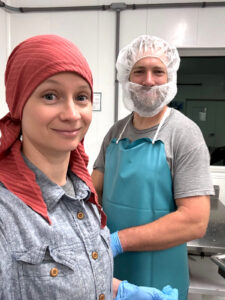
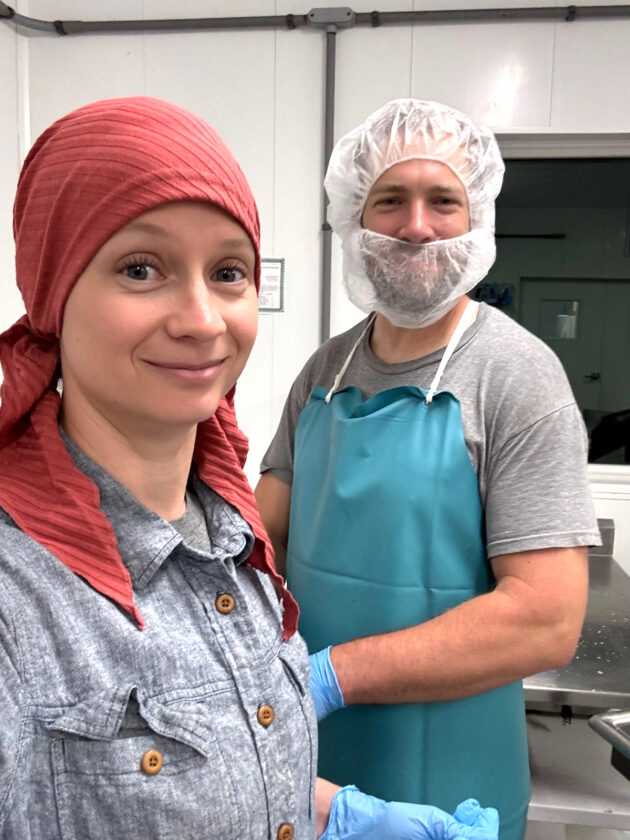
Renae and Kevin Dietzel established their farmstead cheesery in the mid-2010s and began selling cheese commercially in 2016. Their farm sits on approximately 80 acres of land near Jewell.
-
-
-Photo courtesy of Lost Lake Farm
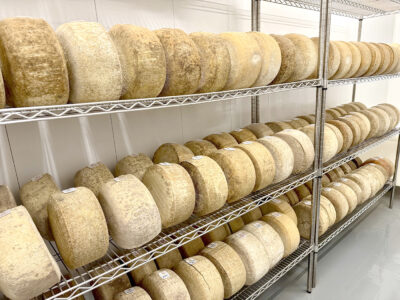
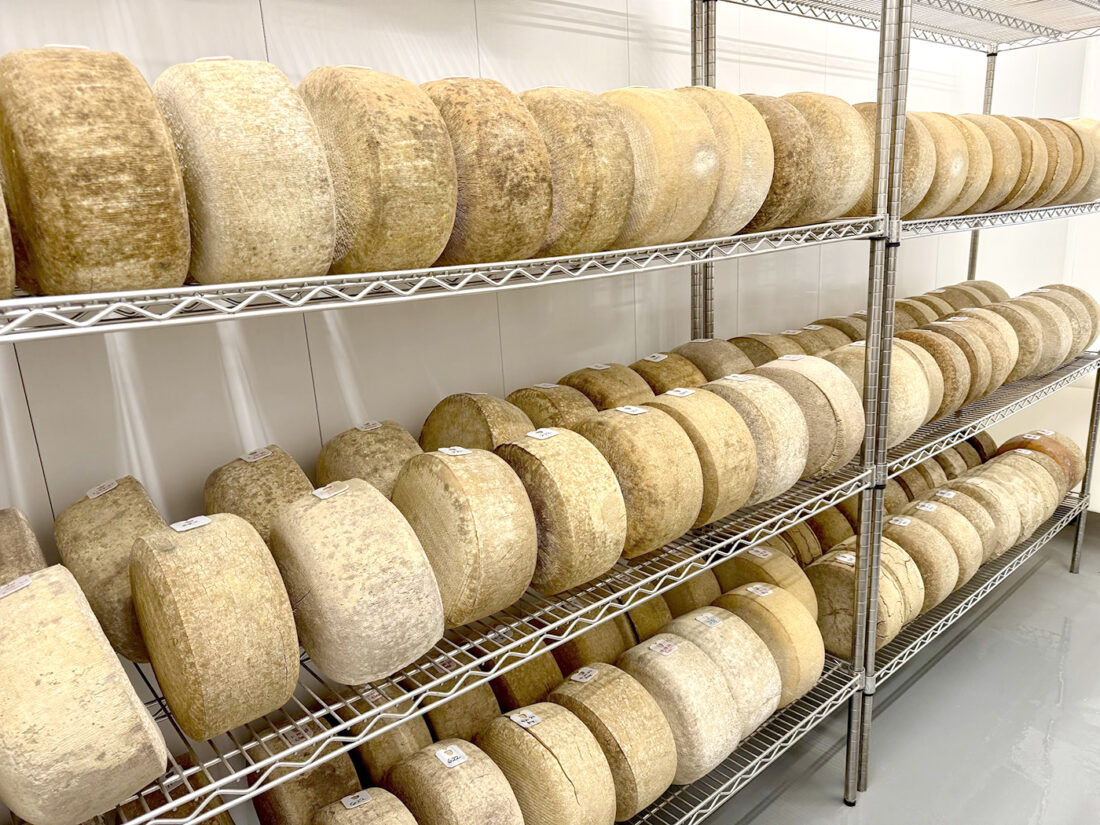
Kevin and Ranae Dietzel cool milk on the farm in a bulk tank and process it into cheese in their cheesery. “Certain cheeses are cave-aged on the farm,” Ranae Dietzel said. “We age wheels in a climate-controlled cave/aging room to develop texture and rind character.”
—Submitted photo
Renae and Kevin Dietzel established their farmstead cheesery in the mid-2010s and began selling cheese commercially in 2016. Their farm sits on approximately 80 acres of land near Jewell.
With genetics procured from France and New Zealand, and a climate-controlled cave for aging award-winning cheeses, Lost Lake Farm in northern Iowa is a family-run farmstead creamery that honors its past while focusing on the future.
Located outside Jewell, Lost Lake Farm’s land sits along the former north shore of Lake Cairo, a broad and shallow lake that was drained in 1895 so the land could be farmed. Lost Lake Farm was established as a farmstead cheesery in the mid-2010s with its owners — Kevin and Ranae Dietzel — selling cheese commercially in 2016.
“Our focus from day one was to add value to our milk by making small-batch, farmstead cheeses and to build a viable, regenerative business in a rural community,” explained Ranae Dietzel. “We wanted to make a living from pasture-based dairying while caring for soils and animals. Cheesemaking was a natural value-add: it lets us convert our grass-fed milk into shelf-stable, high-value products that reflect the flavor of our pastures. Our goal from day one has been to make great cheese from the milk of our own grass-fed cows, while strengthening the economic resilience of our rural community.”
Lost Lake Farm sits on 80 acres.
“Roughly 60 acres are in pasture and the rest are grazed timber,” said Kevin Dietzel. “These permanent forages and wooded areas also support wildlife and bird habitat, which we view as part of our overall land stewardship.”
-Photo courtesy of Lost Lake Farm
Kevin and Ranae Dietzel cool milk on the farm in a bulk tank and process it into cheese in their cheesery. “Certain cheeses are cave-aged on the farm,” Ranae Dietzel said. “We age wheels in a climate-controlled cave/aging room to develop texture and rind character.”
The Dietzels raise Brown Swiss, Jersey, Brown Swiss-Normande-Jersey crosses, and Frisian-Jersey-Normande crosses. The herd is 100% forage-fed, with antibiotics used only when necessary for animal welfare.
“We bring genetics from France for cheese milk quality and genetics from New Zealand for grass-fed productivity. We milk between 10 and 20 cows; we’re currently at the low end of that,” Ranae Dietzel said. “We have selected breeds and crosses that give us a balance of milk composition (good fat and protein for cheesemaking), hardy grazing ability and calm temperament. Those traits suit a pasture-based approach and help support our grassland ecosystem — including the birds and pollinators that rely on diverse pastures.”
Since there isn’t an outlet for liquid milk in Hamilton County, the Dietzels decided to start with cheese.
“There is one other dairy in the county, and we are too small to get milk picked up. On-farm sales were not allowed when we were starting up. Cheesemaking gave us a way to keep small-scale dairying alive locally,” Kevin Dietzel said. “Cheesemaking is both an art and a science — it takes dedicated practice to get a consistent result. I took a few cheesemaking short courses and learned by doing (small batches, repeat tests, tweaking aging and salt, etc.). Expect a steep learning curve at first, but practical training and persistence really pay off.”
The Dietzels use three days of milk to make one batch and each batch takes all day to go from liquid to solid form.
“We cool milk on-farm in a bulk tank and process it into cheese in our cheesery. Certain cheeses are cave-aged on the farm,” Ranae Dietzel said. “We age wheels in a climate-controlled cave/aging room to develop texture and rind character.”
When it is ready to eat depends on the style of cheese. Fresh cheeses (like quark and mozzarella) are made and sold within days. Semi-soft cheese mature for six to 12 weeks. Semi-firm and alpine-style wheels require longer aging, anywhere from several months to several years, the Dietzels said.
“We make a range of farmstead cheeses that all start with milk from our grass-fed herd, from fresh, spreadable cheeses to long-aged alpine wheels — and each style reflects the pastures, soils and on-farm care that produce the milk,” Ranae Dietzel said. “We try to make a cheese for every purpose — snacking, sandwiches, salads and cooking.”
Those cheese varieties include:
Quark (fresh, farmer’s cheese): a mild, creamy fresh cheese that highlights the clean, grassy notes of their milk. Because it’s eaten young, quark is a direct, immediate expression of what the cows had been eating that week.
Camembert/bloomy-rind styles: soft-ripened wheels with a creamy interior and mushroomy, lactic notes. These cheeses bring forward delicate pasture flavors and the butteriness that comes from well-managed forage diets, Ranae Dietzel said.
Burnt Oak (ash-ripened / bloomy-rind style): an ash-ripened Camembert where they use ash made from a fallen 200-year-old burr oak tree from the farm. “It’s a small, literal piece of our landscape in the cheese — a direct story of place and history layered onto the flavor,” Kevin Dietzel said.
Iowa Alpine (semi-hard / Gruyere-style): our best-seller and the cheese that “started it all.” It’s an aged, Tomme/Alpine style with a sharp, complex, nutty profile — the sort of depth and savory character that develops from milk with the fat and protein profile you get from diverse, rotationally grazed pastures, the Dietzels said.
Alparm (two-year aged grating cheese): a long-aged, hard grating wheel — nutty and crystalline — made to be grated over pasta or salads. “Long aging amplifies the mineral and savory notes that are rooted in our soil and forage,” Ranae Dietzel said.
Faaborg (semi-soft / washed-rind): A Havarti-style cheese inspired by Scandinavian farmhouse traditions, the Faaborg carries gentle earthy, grassy notes from the Dietzels’ pasture-raised herd with a “supple, creamy texture and a subtle rind character that speaks to our regenerative soils and seasonal grasses.”
Lost Lake Farm’s cheeses are sold directly to customers from their online shop, including through a Winter Cheese Club, at farmers’ markets in the summer and to some local retailers and restaurants. The online shop lists the various products and cheese club options.
“These direct markets help keep more food dollars circulating in rural Iowa,” Ranae Dietzel said.
Their customers range from local customers to regional food lovers. They’re people who shop farmers markets, belong to the farm’s cheese club, specialty food shoppers and local restaurants and retailers who are searching for a value grass-fed, farmstead cheese and rural food producers.”
“Customers consistently tell us they love the flavor and texture, the immediate freshness of farm cheeses and the depth from cave-aged wheels, plus the story of grass-fed milk, regenerative land care and on-farm production,” Kevin Dietzel added.
Personally, the Dietzels love making their alpine-style wheels — the Iowa Alpine.
“There’s a special satisfaction in turning pasture into a rugged, savory wheel that ages well,” Kevin Dietzel said. “In the make room, we prefer simple methods — gentle heats, careful cultures, steady hands, and aging that lets each cheese find its own voice. The result is food that reflects central Iowa and helps strengthen the rural communities we’re part of.”
Both Dietzels grew up around farming, with Kevin Dietzel heading overseas to train in biodynamic farming in Germany. He completed an apprenticeship at three farmsteads and earned state certification as an agriculturalist.
“Kevin’s work on U.S. and German farms (and in grazing/producer support roles) exposed him to diverse grazing systems and cheesemaking traditions,” Ranae Dietzel said. “That experience broadened his skills, from herd and pasture management to cheesemaking technique, and inspired the farming and land stewardship practices we use at Lost Lake Farm.”
When he returned to the U.S., Dietzel studied biology at the University of Minnesota Morris and worked in soils research at Cornell, conservation outreach with Iowa Learning Farms and grazing coordination with Practical Farmers of Iowa.
“Those experiences shaped a calm, low-intervention approach to milk and pasture. In 2016, after planning and building the cheesery, Kevin stepped into the farm full-time,” Ranae Dietzel said. “The farm started as part-time until we were able to bring Kevin on full-time. Lots of planning, slowly building up the herd and raising capital — a gradual investment in both the land and our ability to run a small rural business.”
Ranae Dietzel was raised on a hog farm near Radcliffe where she developed an interest in how soils breathe and grow. She earned her master of science degree in soil science from Cornell University, studying nitrous oxide emissions, and a doctoral degree in sustainable agriculture and crop production and physiology from Iowa State University. Her area of interest in research focused on carbon and root dynamics in prairies and row crops. In addition to the family farm, Dietzel works as a social scientist for Syngenta.
The Dietzels not only dedicate themselves to artisanal cheesemaking and the tender care of their cattle herd, but also are heavily focused on protecting the ground they rely on to raise their bovines. For example, they return composted bedding and manure to their fields, and move cows to fresh grass twice a day when grazing allows.
“Grass-based dairying is central to both our animal welfare and flavor goals. Pasture-based systems support healthier cows, healthy soil and ecosystem, and a milk profile that translates into more interesting, terroir-driven cheeses,” Kevin Dietzel said. “Being 100% grass-fed is also part of our story — it’s how we link soil health, wildlife habitat and finished flavor together.”
Grazing management and low-stress handling of the cattle helps develop a purer, more flavorful milk. Not only do they rotational graze the cattle and ensure they have lots of pasture access for most of the year, they feed hay on pasture in the winter.
“We use regenerative soil practices to keep pastures diverse and productive, which in turn benefits wildlife, birds and the cows’ diet,” Ranae Dietzel said. “Our primary focus is on pastures and forages for the dairy herd; we use diverse pasture species, legumes and forage crops to support grazing and soil health. Sometimes we drill in a summer annual, like sorghum-sudangrass, but we are still working on that system.”
Having such an extensive education in soil health has helped the Dietzels tremendously.
“My soil-health background helps me understand why our grazing-based system works so well and how the decisions we make shape the land over time. It gives me a framework for seeing the connections between plant diversity, soil structure, water movement and the biological life that supports healthy pastures,” Ranae Dietzel said.
“Our pastures stay in permanent cover and the cows move frequently to fresh grass. That style of management naturally builds soil organic matter, protects against erosion, improves water infiltration and strengthens the underground ecosystem that drives nutrient cycling. Over time it creates a more resilient landscape — one that holds moisture better, bounces back from stress, and supports richer wildlife and bird habitat.
“So my soil-health training mostly guides how I interpret what the land is telling us: noticing how pastures respond to rest, understanding why diverse forages matter and recognizing the long-term benefits of manure distribution, deep roots and gentle disturbance,” Ranae Dietzel continued. “All of that reinforces a system where healthy soils support healthy cows — and ultimately, better cheese.”
While Kevin Dietzel works full-time on the farm and cheesery, and Ranae Dietzel part-time on the farm and cheesery, plus doing computer work, they also have a cheesemaking associate who works half-time and a neighbor who works part-time as a cheesery cleaner and cow milker. Their teenagers even log a few hours each week, pitching in.
“The jobs we create are a meaningful piece of our commitment to rural vitality, and we would like to be able to create more,” Ranae Dietzel said. “We’re proud that Lost Lake Farm connects soil health, pasture management and careful cheesemaking. Everything — from pasture to cave — is designed to be regenerative, to support wildlife and to contribute to a vibrant rural community. We couldn’t do it alone: our investors, LLC members, family and neighbors all play a vital role in making the farm a success. We also love interacting with our broader community through farmers’ markets and the Winter Cheese Club, sharing the story of our pastures and the cheeses they produce.”
Local News
Dietzels age award-winning cheeses on Jewell Farm
Nelson named to new role, moving from Growth Alliance to Iowa Central Community College
Jill Nelson, a veteran leader of the Greater Fort Dodge Growth Alliance, has been named vice president of strategic ...
Students show school spirit during Winterfest rally
Midas Transportation keeps rural Iowa connected
Webster City Middle School band students chosen for honor band in Jewell
Veteran Affairs have event at Links this week
River Valley Veterans Network will be hosting a veteran networking event on Thursday. This will be held at the ...