Not if, but when
Emergency Management team plans for the future
-
-
Daily Freeman-Journal photo by Kolleen Taylor
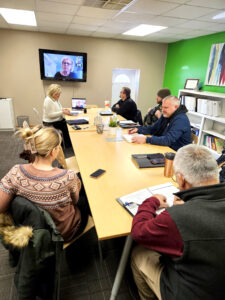
It was a small group representing all of Hamilton County as they listened to the efforts by both Clay and Marshall Counties to rebuild after disasters hit their communities. Attending were, from left: Julia Nelson, Darcy Swon, Webster County Emergency Management Coordinator Dylan Hagen, Wyatt Opperman, Tim Zahn and Juan Trujillo. Also attending, not visible was Pamela Harklau.
Daily Freeman-Journal photo by Kolleen Taylor
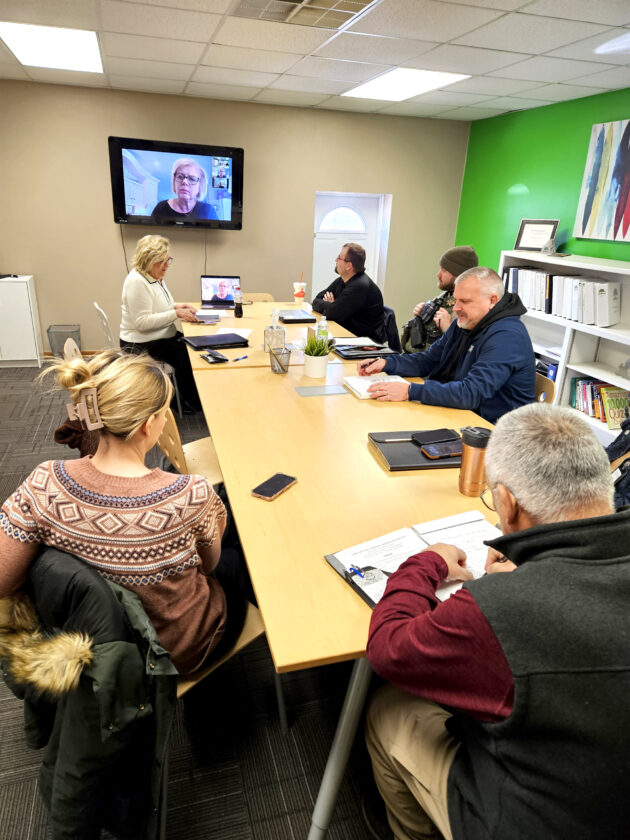
It was a small group representing all of Hamilton County as they listened to the efforts by both Clay and Marshall Counties to rebuild after disasters hit their communities. Attending were, from left: Julia Nelson, Darcy Swon, Webster County Emergency Management Coordinator Dylan Hagen, Wyatt Opperman, Tim Zahn and Juan Trujillo. Also attending, not visible was Pamela Harklau.
No one wants to think about the need for an emergency plan, but at least one group in Hamilton County has been tasked with putting a plan together in the event a major disaster occurs within any of the communities in Hamilton County.
Tim Zahn is the coordinator for the Emergency Management services in Hamilton County. On Tuesday, a team gathered for a Zoom meeting with the Community Foundation directors in Marshall and Clay counties. Both counties made similar recommendations; do not wait for a disaster to hit, get organized now. The first of several steps were evident from their presentation.
Darcy Swon, Development Director for the Enhance Hamilton County Foundation has already determined two functions need to be in place to be prepared. One is to establish a disaster fund under the umbrella of the foundation that can be quickly activated and easily accessed to distribute funds in the event of a disaster. The second is to re-invigorate a county-wide meeting of non-profit groups that will meet together to help each city organize and be prepared in Hamilton County.
It’s been 20 years since the F3 tornado hit Stratford in 2005. It was part of a large outbreak of tornados, and that one tornado traveled nearly 18 miles leaving destruction in its path. Electrical and gas service was shut down, many homes were damaged. People gathered at the fire station, vehicles were unable to be moved out of garages and streets were full of debris. Lucille Runyan, at the age of 84 died when her home on the north side of Stratford was hit.
It can happen again anywhere in Hamilton County.
Neither Marshall or Clay county could have anticipated the devastation they faced more recently.
Both counties faced overwhelming and unpredictable emergencies. According to state weather sources, Marshalltown was hit by an F3 tornado in July 2018. On that day, 21 tornadoes were sited, 19 northwest of Des Moines. Marshalltown received the worst damage. Two years later, in August 2020, the Deracho came through, with winds exceeding over 100 miles per hour.
Julie Hitchins is the Executive Director for the Community Foundation of Marshall county. There was nothing in place to deal with the scale of emergency when the tornado hit; with Covid following shortly after the town was severely damaged, they were barely back in business when the Derecho tore through their community again.
Clay County faced the extreme floods in 2024, Spencer sustained the bulk of the damage. Terri Batschelet was the Executive Director for the Clay County Community Foundation. They lost electricity and streets were flooded in a very short period of time.
Clay county has 16,000 residents. 10,000 lived in Spencer. 70% of the structures were damaged by the floods, 30% of the businesses. Some houses were collapsing, other homes were still standing, but uninhabitable.
Homeless shelters were set up in two different churches, while a third church accepted donations. Money was pouring in, but scams were also starting to show up. They had to quickly find a single source to accept donations. There were two steps to consider: immediate food and shelter; rebuilding would come later.
The stories and the process of building back these two Iowa communities were eye opening. Swon coordinated the Zoom meeting with the two other communities, to focus on a starting point for the Emergency Management group. Members who listened to the stories included Juan Trujillo with the American Red Cross, Pamela Harklau of Hamilton County public health, Julia Nelson with Hamilton County Community Services, and Wyatt Opperman of the Hamilton County Sheriff Department.
Both communities noted that funds started arriving into the communities the next day after their disasters happened. Funds were identified for two phases, immediate survival funds for shelter and food, and long-term recovery.
Pulling together the organizations and non-profits that can help coordinate an emergency response is key. In 2024, Spencer learned that scammers could quickly set up sites to accept donations. Having a single point of entry for fundraising and disbursement became a high priority. Over the next few months, Swon is hoping to gather all the organizations into a comprehensive list to ensure funds can quickly move into the various communities if they are needed.
The process is just beginning, but having the first tools in place now, will help at whatever time that they are needed.
When disaster strikes, it’s good to know there is a plan.
Local News

‘99 Counties of Iowa’ writer to speak at Kendall Young Library on Saturday morning

The people behind the presses

Webster City to host state convention of Iowa Community Theatre Association this month

What is a SSMID?

Hamilton County Conservation efforts show improvement in water management areas