Trending
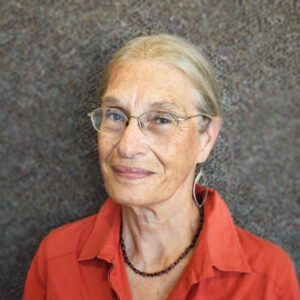
Ancient trails will lead to Mulberry Center Church at Wilson Brewer Park in Webster City Saturday with August presenter Cherie Haury-Artz.
This free event begins at 1 p.m. in the church on the grounds of the historic park at the corner or Superior and Ohio streets.
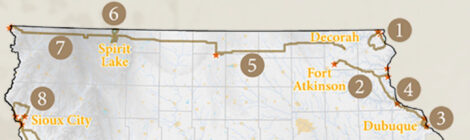
In Iowa, 6,830 miles of trails were mapped by the General Land Office between 1833 and 1861. This was prior to the United States government sale of land to the newcomers, who were mainly Euro-American settlers, according to a research project funded by the Transportation Alternatives Program, Office of Systems Planning, at the Iowa Department of Transportation.
That research discovered that the northern 42 counties of the state were found to contain 437 trails that together measured 1,590 miles.
Only about 15% of those survive today, according to analysis of aerial photos, old maps and high-resolution lidar topographic maps. Many of the old trails that survive are private field roads. Some align with public roads.
Haury-Artz has a keen interest in the tales these trails can tell.
She received her BA in anthropology at SUNY Potsdam and a MA in anthropology from the University of Kansas. She worked in North Dakota, South Dakota, Kansas and Oklahoma before moving to Iowa, and her focus area is the Great Plains.
Her research interests include analysis of fauna from archaeological sites, use and identification of lithic resources, rock art, and environmental adaptation of ancient cultures. She has a special interest in public education and outreach and is certified as a teacher and facilitator for Project Archaeology.
Additionally, she has more than 20 years experience teaching classes and writing interpretive content for all ages and audience types. Haury-Artz serves on the Plains Anthropological Society (PAS) Ethics and Inclusion Committee and Board of the Iowa Archeological Society, and she served three years on the PAS Board.
As an Education Assistant at OSA, she contributes to educational initiatives such as developing and presenting K-12 and public programs (in-person and digital), consulting on archaeology exhibits, and creating hands-on teaching resources.
She also does field work and conducts faunal analysis for research projects.
The route ancient trails took was typically the path of least resistance -- that is, they followed natural routes that respected existing topography.
This free lecture will take the audience on a historic journey, in a historic church, that pays its respects to the trails that have gone before and the stories that followed.